




Canada Research Chairs
The Canada Research Chairs Program invests hundreds of millions of dollars every year to position Canada as a global leader in research and development. Tier 2 Chairs are awarded to exceptional emerging researchers who demonstrate potential to lead in their field, while Tier 1 Chairs recognize outstanding researchers who are acknowledged as world leaders in their field. UPEI currently has five active Tier 2 Canada Research Chairs.
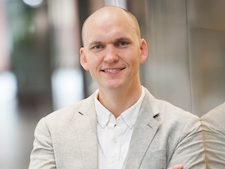 Dr. Joshua MacFadyen
Tier 2 Canada Research Chair in Geospatial Humanities
Associate Professor, Faculty of Arts
Dr. MacFadyen is investigating the significant social-ecological transitions in Canadian agriculture using innovative digital history and geospatial analysis of case study areas in the Maritime, Eastern Great Lakes, and Prairie regions. He is exploring how rural Canadians exchanged one energy system for another by mapping the transition from an extensive organic frontier to intensive food and energy systems. By increasing capacity to understand both the physical transformations of place and their social impacts, his research will help to inform better land use planning, resource co-management, and risk management in the future.
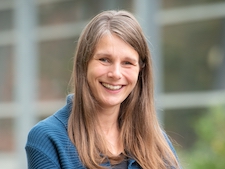 Dr. Caroline Ritter
Tier 2 Canada Research Chair in Social Epidemiology for Healthy Animals
Assistant Professor, Department of Health Management, Faculty of Veterinary Medicine
Dr. Ritter combines social science, veterinary epidemiology, and animal welfare research. She is exploring attitudes and beliefs held by animal owners and custodians to investigate what motivators and barriers contribute to their decision-making. She is investigating how veterinarians can become more successful at advising their clients by improving their communication skills to help put into practice the evidence-based knowledge that currently exists. Adopting a One Welfare framework, she is also conducting research to foster human mental well-being and understand its relationship to animal welfare.
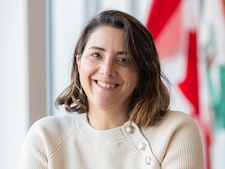 Dr. Sara Sadri
Tier 2 Canada Research Chair in Remote Sensing and Water Security
Associate Professor, School of Climate Change and Adaptation, Faculty of Science, cross-appointed to the Faculty of Sustainable Design Engineering
Dr. Sadri uses advanced mapping tools, satellite data, and machine learning to study how climate events like agricultural droughts and foods impact food and water security. Her scalable, context sensitive methods combine environmental data with socioeconomic data to monitor and assess food security dynamics and regional livelihood outcomes. Dr. Sadri also incorporates citizen science and public surveys to ensure her models reflect lived experiences. Her interdisciplinary approach helps predict and understand how climate changes affect communities, supporting better decisions and policies around food, water, and the environment.
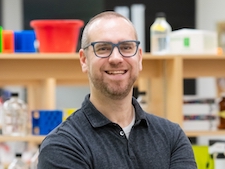 Dr. Jay Penney
Tier 2 Canada Research Chair in Biomedical Genetics
Associate Professor, Department of Biomedical Sciences, Faculty of Veterinary Medicine
Dr. Penney researches the roles of microglia, the brain’s specialized immune cells, in neurodegenerative disease. Diseases like Alzheimer’s disease, Parkinson's disease, and ALS occur when subsets of neurons malfunction or die, and there is a growing appreciation that microglial dysfunction can contribute to this process. Large-scale genetic studies have identified many genetic mutations that can make it more likely that someone will develop a particular neurodegenerative disease. Dr. Penney is using gene editing techniques and human induced pluripotent stem cell models to understand how these mutations affect the functioning of microglia, as well as to test potential disease treatments.
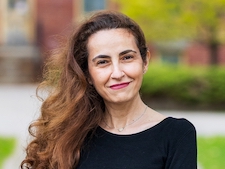 Dr. Hala Mreiwed
Tier 2 Canada Research Chair in Children, Youth, and their Educational Geographies
Assistant Professor, Faculty of Education
Dr. Mreiwed’s research focusses on children’s rights research and education with and by children and youth (under the age of 18) and pre-service teachers in Atlantic Canada's Bachelor of Education programs as co-researchers/co-creators of knowledge. Through creative drama activities and participatory action research, Dr. Mreiwed aims to understand how the educational geographies and lived experiences of children and youth, and pre-service teachers shape their perceptions and realization of children’s rights. Her Children's Rights Research and Education (CRRE) Lab will use this knowledge to identify supports and generate new resources for teaching and learning about children's rights. The CRRE Lab is an interdisciplinary hub for research, training, community outreach, and resources on children’s rights education in rural Atlantic Canada.


