


Action Plan IMPACT: Celebrating our commitment to restorative justice and keeping it alive
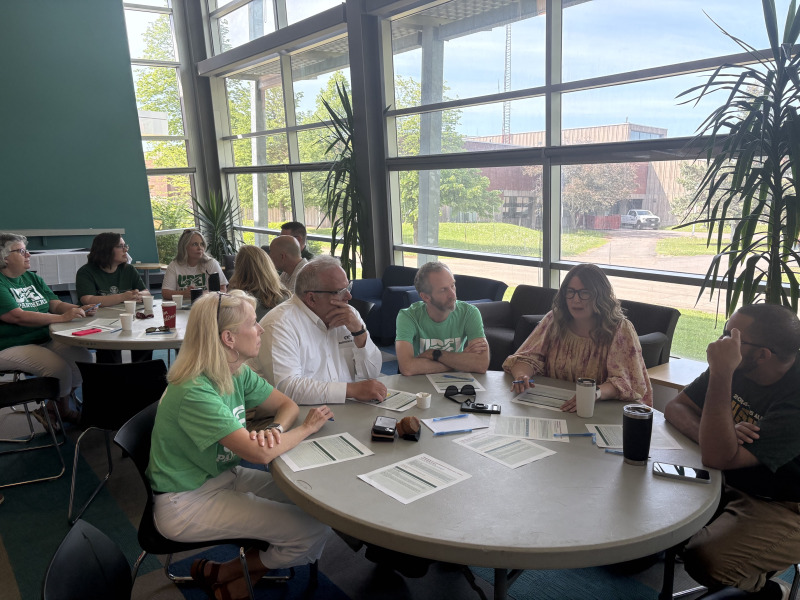
On June 11, UPEI celebrated 12 employees who completed the Restorative Practices Capacity-Building Program. Over four months, these practitioners developed restorative justice skills through eight bi-weekly Reflective Learning sessions and two Training-for-Facilitators workshops. Another 100 senior leaders and middle managers attended a half-day workshop where they gained foundational knowledge in restorative practices.
The Employee Experience and Development office in UPEI Human Resources, in cooperation with Alderwick and Associates, developed the program and workshop in alignment with UPEI Action Plan activity (2.4.1) to develop training programs for University leaders in areas such as active listening, EDI, cultural competencies, mitigating unconscious bias, implementing policies and processes effectively, conflict management, emotional intelligence, and bystander training.
Dr. Wendy Rodgers, President and Vice-Chancellor gave opening remarks, reaffirming leadership’s commitment to the program and encouraging community members to support well-being and self-awareness, and to accept invitations to adopt restorative practices, which will help them “live” the University’s values.
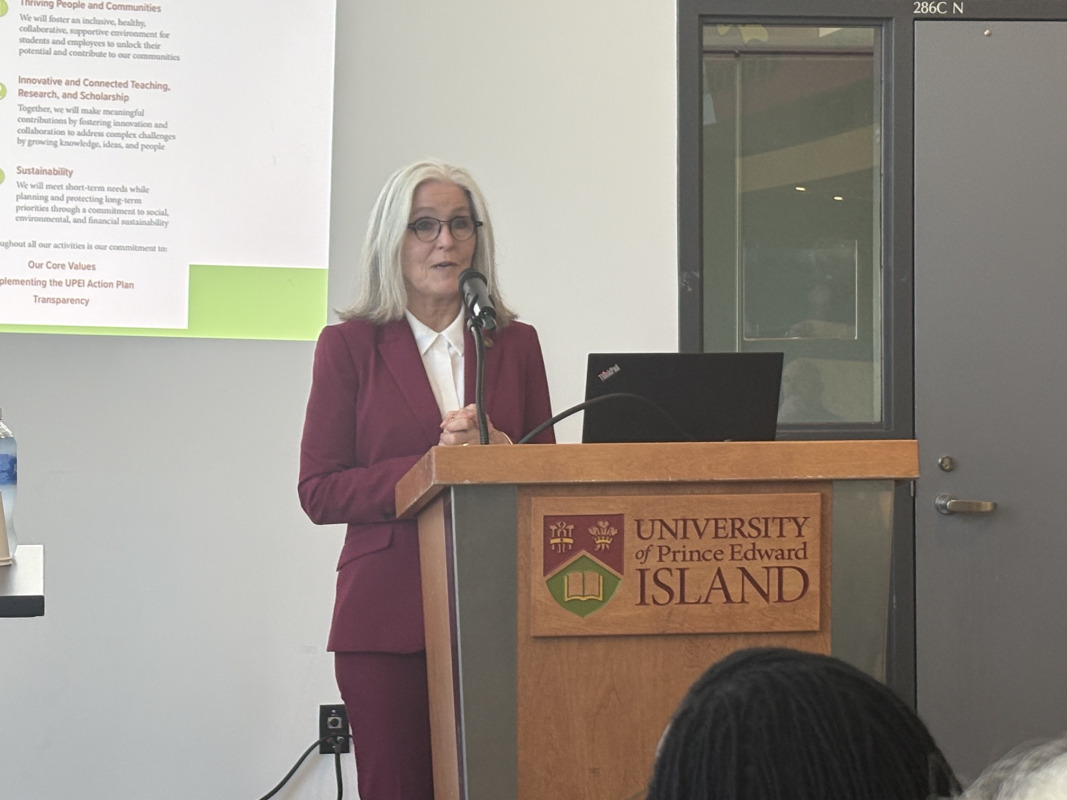
“Well-being is important and we must all participate in supporting our own well-being, our colleagues’ well-being, and institutional well-being… and we should all be working on self-awareness,” she said. “It’s critical to not only how we interact with others, but also how we invoke self-care and self-compassion. It also demonstrates that we have a way to go in developing trust at the institution and attributing good intention to our colleagues. The only way to continue to develop a culture of trust, safety, and inclusion is to have integrity and accountability. This program creates pathways—it gives invitations through restorative processes—for all of us to live our values.
“Today, we celebrate 12 colleagues here at UPEI who have taken the opportunity to be positive agents of change, and they’re going to be our support. Thanks to those of you who participated and to those who put this program into action.”
Dr. Jane Ngobia, Vice-President, People and Culture, explained how this milestone marks the beginning for using restorative practices alongside UPEI’s systems, policies, and procedures to continue to create a culture of trust, safety, and inclusion.
“Thank you for participating in this training—it is a commitment to leading differently, a commitment to building something stronger at UPEI. Restorative justice is not just a set of tools; it is a shift. It’s a shift in how we feel. It’s a shift in how we live. It’s a shift in how we relate to one another. And shifts are not easy.”
The Restorative Practices Capacity-Building Program is designed to build participants’ capacity to respond to harm using restorative and relational approaches that complement, rather than replace, formal investigative and disciplinary processes. It strengthens skills in facilitation, accountability, and repair of harm, while reducing the risk of re-traumatization and centering survivor agency and human rights. It offers alignment with University policy and legal obligations while amplifying best practices in community restoration.
Dr. Ngobia added, “We work in a unionized environment. And in a unionized environment, we rely on policies and collective agreements, and we should because policies matter, collective agreements matter. They provide structure, they ensure fairness, they guide our decisions, they protect our people. But what we have learned together is that policies are necessary, but they are not sufficient.
“And that is where restorative practices come in. It is important to build the infrastructure of policies, procedures, processes, reporting procedures…but we have to do more. The restorative justice approach strengthens our policies, humanizes them and brings them to life in our everyday work…. This training helps us to ensure that we show up differently: we listen more, assume less, create space, and share responsibility. This is how culture change happens, not through big declarations, but in small concrete choices…in how we respond when there is a concern, how we deal with conflict, and how we hold space when something goes wrong…. This is only the beginning. We shall continue to support one another, and I look forward to our work together.”
Sula Levesque, Director of Equity, Diversity, Inclusion, and Human Rights, concluded the event by asking practitioners and leaders to reflect during a “think, pair, and share activity” on the key takeaway from their participation in the capacity-building program or workshop; how to apply that key learning to their work; and what can be done collectively to further UPEI’s commitments to restorative justice in practice.
“UPEI made a commitment to build our collective capacity to address conflict and harm in ways that are less adversarial, more relational, and more closely attuned to our values,” said Levesque. “Today, we celebrate the practitioners who completed 75 hours of training to make that commitment real. Also, we celebrate the leaders who committed to supporting them to keep their learning alive and to embracing the principles of restorative justice in their leadership practice. Together, we are charting next steps!”
After a spring hiatus, we're back telling the stories of important progress on the UPEI Action Plan, under the “Action Plan IMPACT” banner. Articles will share how the Action Plan implementation activities are being operationalized, becoming entrenched in our culture and living on long past the plan—making real IMPACT. To submit your own Action Plan IMPACT story, contact communications@upei.ca. To view the last Action Plan IMPACT story, click here.


