


"Being at UPEI means joining a close-knit, student-focused learning community"
What brought you to UPEI? Why did you choose to teach here?
I grew up in Kensington, Prince Edward Island and as a UPEI Bachelor of Science in Nursing (BScN) graduate myself, I experienced first-hand the supportive learning community here. After working in clinical practice and returning for my Master of Nursing, I was drawn back to UPEI because of its commitment to primary health care, student-centered teaching, and innovation in simulation-based education. Teaching here allows me to contribute to the same environment that shaped my own professional journey while preparing future nurses to provide compassionate and competent care.
What is your role in the Faculty of Nursing, and what are your areas of expertise?
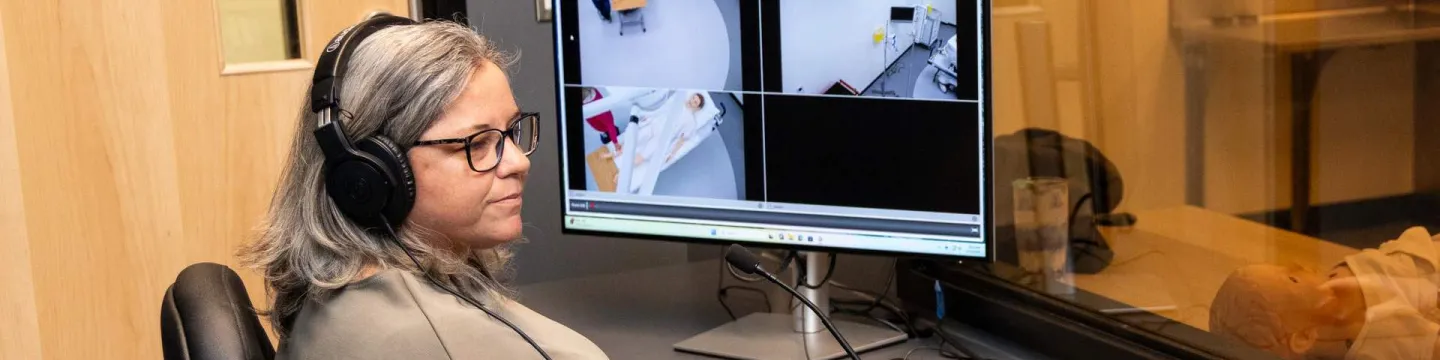
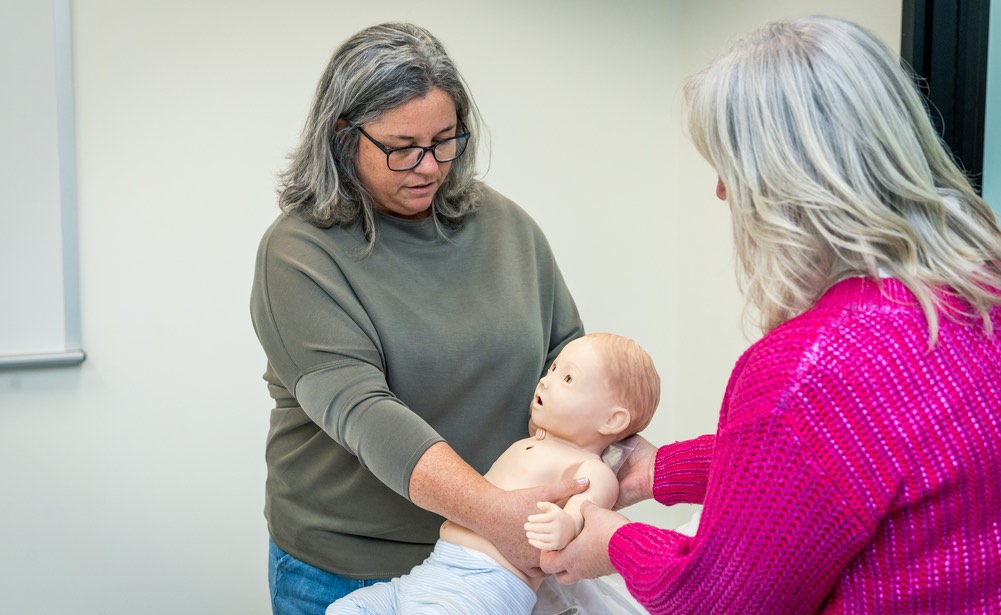
Currently, I coordinate simulation across all four years of the BScN and graduate program at the Faculty of Nursing working with students on many acute care, community-based, and interprofessional simulation scenarios. My areas of expertise include simulation pedagogy, curriculum development, health assessment, and interprofessional education.
What do you find unique and interesting about the Faculty of Nursing and its programs?
The Faculty of Nursing at UPEI is unique in how it blends small class learning with innovative teaching strategies like simulation and interprofessional collaboration. Our program is deeply connected to the health needs of the Island and emphasizes cultural safety, reconciliation, and primary health care. I find it inspiring that our students not only learn in classrooms and clinical settings but also gain experience through immersive simulations that mirror the complexities of real-world nursing practice.
"Our nursing program is academically rigorous while also preparing graduates to be compassionate, socially accountable, and adaptable to the evolving needs of health care."
Are there opportunities for students to work with you in a research/co-instructional capacity? If so, can you describe those experiences?
Yes. Students have valuable opportunities to collaborate with me in the development, facilitation, and debriefing of simulation scenarios, and their perspectives are always welcomed and appreciated. These experiences allow them to build confidence as educators, strengthen their leadership and communication skills, and see firsthand how simulation supports the development of clinical judgment. In addition, we have student assistants who play an important role in the physical setup and organization of simulations, helping to manage equipment and create realistic learning environments. Whether through co-instructional roles or behind-the-scenes support, students gain unique insight into simulation-based education and the impact it has on preparing future nurses.
What kinds of professional development in teaching areas are available to you here at UPEI?
UPEI provides rich professional development opportunities through the Teaching and Learning Centre and the Faculty of Nursing. I’ve participated in equity, diversity, inclusion, and decolonization workshops, as well as simulation-specific certification programs offered nationally. This ongoing support helps me continuously enhance my teaching practice, integrate new strategies, and align with best practices in nursing education.
What should prospective students and potential faculty members should know about your job?
I would emphasize that being at UPEI means joining a close-knit, student-focused learning community that values innovation and collaboration. Our nursing program is academically rigorous while also preparing graduates to be compassionate, socially accountable, and adaptable to the evolving needs of health care. One of the most exciting developments is that our simulation program will soon be moving into the new Collaborative Health Education and Learning Simulation Centre (CLSC). This state-of-the-art facility will bring nursing students together with learners from across the health professions, offering expanded opportunities for interprofessional education and access to the latest simulation technologies. For students, it means an even richer, more realistic learning experience; for faculty, it opens the door to creativity, collaboration, and meaningful impact on both curriculum and the broader health system.


