




UPEI’s inaugural Restorative Practices Capacity-Building program launched
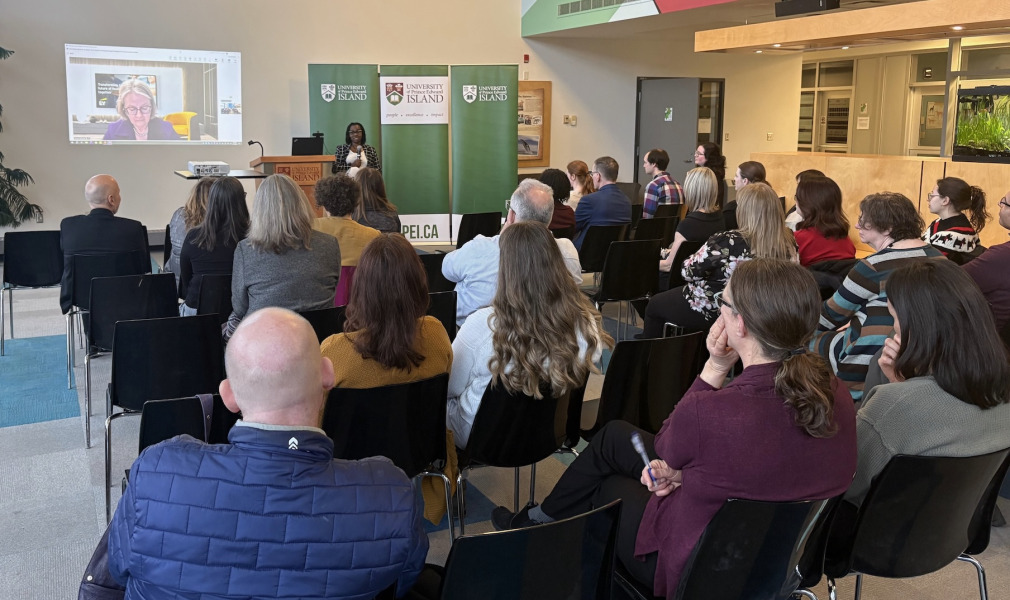
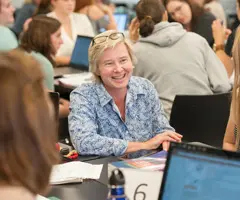
UPEI held a ceremony to launch its inaugural Restorative Practices Capacity-Building program on March 11 at The McCain Foundation Learning Commons, Atlantic Veterinary College.
The UPEI Equity, Diversity, Inclusion, and Human Rights (EDIHR) department, in cooperation with Alderwick and Associates, developed the program in alignment with the UPEI Action Plan’s activity to develop training programs for University leaders in areas such as active listening, EDI, cultural competencies, mitigating unconscious bias, implementing policies and processes effectively, conflict management, emotional intelligence, and bystander training.
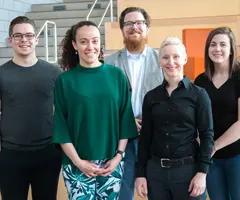
Over the course of the four-month program, the initial cohort of 19 UPEI employees will get in-depth train-the-trainer restorative skills development to become facilitators, and about 100 senior leaders and middle managers will subsequently receive foundational training in restorative practices.
The program, inspired in part by the Government of PEI’s Restorative Justice Program, is designed to build participants’ capacity to respond to harm using restorative and relational approaches that complement, rather than replace, formal investigative and disciplinary processes. It strengthens skills in facilitation, accountability, and repair of harm, while reducing the risk of re-traumatization and centering survivor agency and human rights. It offers alignment with University policy and legal obligations while amplifying best practices in community restoration.
Dr. Jane Ngobia, Vice-President People and Culture, opened the ceremony with a land acknowledgement, explained the program, and introduced its participants.
“At UPEI, we honour the Mi’kmaw tradition of consensus-based dialogue, a practice that elevates relational accountability, shared voice, and healing. These teachings shape many of today’s restorative practices in Canada, reminding us that justice lives in relationships and in repairing those relationships that are broken,” she said. “We draw on these teachings with humility and with care. We intend to commit these practices, so we consent to accountability, and we consent to healing and respectful relationships with one another.”
Milé Komlen, managing director, Ethical Associates Inc., has been contracted to assist UPEI’s EDIHR department with implementing recommendations from an assessment of the department completed in 2025, including a structural realignment to position it to perform its mandate and advance the goals outlined in the UPEI Action Plan. He spoke about UPEI’s approach to addressing harm and conflict at the University and the model that it is working towards.
“Universities are sites of resistance, sites of activism, sites of change, and because of that, there are often some tensions that arise. The work that I do is looking at ways to handle those types of disputes that occur on campus and … resolve issues in a collaborative way that restores relationships among people within the work environment,” he said. “My hope in this program is that the participants are going to take their learning and knowledge and spread that information to others throughout the campus community and really be the thought leaders on … how we can build that sense of cohesive campus community so that we can work towards transformative ways of doing our work and really serving the communities that we’re here to work for.
Stacey Alderwick, Principal Consultant with Alderwick and Associates, introduced the facilitators and explained how the program is delivered.
“Helping people keep the channels of communication open has long been my mandate. I believe in making space for honest, authentic dialogue, for responsibility, and for the possibility of repair,” said Alderwick. “Now we recognise the experiences of harm and injustices are shaped by identity and power. Systemic indifferences are also a part of that. We’re committed to approaches that are compassionate, trauma-aware, and inclusive. We believe that justice must be accessible and community-centred. That’s why it feels important to work with the people who are on the front lines of resolution because it will give us insights that we couldn’t possibly have otherwise. We’re really looking forward to this journey with this first cohort from UPEI.”
Shannon MacDonald, Chair of the UPEI Board of Governors, who joined virtually, said that her early years at UPEI provided a strong educational foundation and a supportive community that helped prepare her for a successful career. She emphasized the importance of carrying that same spirit of support forward by allowing positivity to grow within the University community and by intentionally sharing it with one another. While UPEI works to help students feel confident and prepared to succeed in the wider world, she noted, it is equally important for members of the community to support and care for themselves and each other.
In concluding the ceremony, Dr. Wendy Rodgers, UPEI President and Vice-Chancellor, said the University’s current efforts represent an important journey that began when certain issues came to light, even though the conditions that allowed them to occur had existed for some time. She noted that understanding these historical and contextual factors is an important step toward strengthening the campus community, acknowledging that they have contributed to conflict and challenges around trust, particularly when clear pathways for addressing concerns were not always in place. Rodgers emphasized the value of thoughtful reflection, encouraging individuals to consider both their present and past roles in shaping the University’s environment as it works toward stronger relationships, greater accountability, and renewed trust.
The Restorative Practices Capacity-Building program includes eight bi-weekly Reflective Learning Sessions and two Training-for-Facilitators workshops. Delivery of the program combines virtual and in-person sessions and will run until June 10.


