

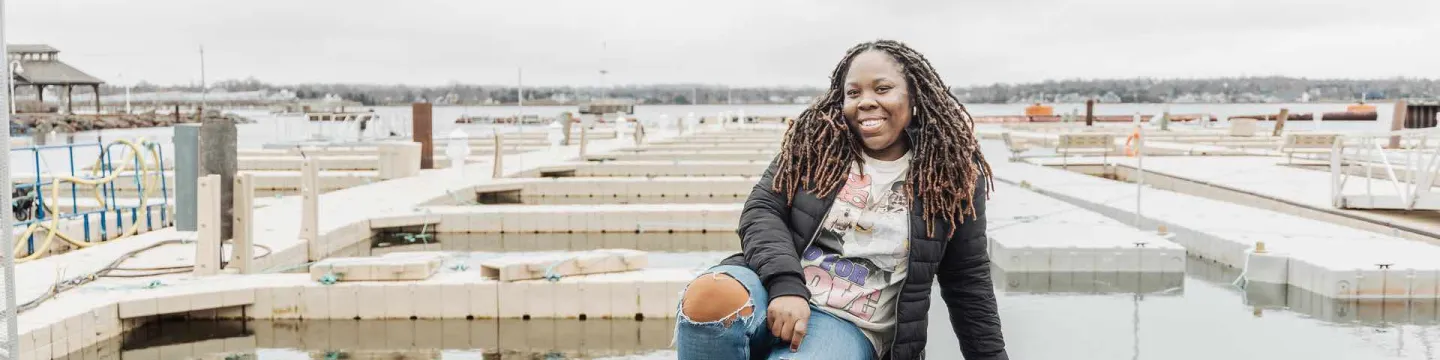
"UPEI's MAIS program encourages independence, critical thinking, and self-reflection."
What brought you to UPEI? Why did you choose to study here?
My interest in governance has shaped both my academic and professional journey. I am from Troy, Trelawny, Jamaica and I completed a Bachelor of Science in International Relations with a minor in Criminology at the University of the West Indies. Growing up in a rural community, I saw many of the challenges that shape everyday life: economic inequality, limited access to quality education and healthcare, crime, corruption, and environmental degradation. Those experiences stayed with me and strengthened my desire to better understand how governance and policy decisions affect communities.
Pursuing graduate studies was always part of my plan, although I was not initially certain where that path would lead. After careful reflection and conversations with family and friends, I decided to pursue my master’s degree internationally. I chose University of Prince Edward Island because of its strong reputation in island-focused research, particularly through the Institute of Island Studies. The Master of Arts in Island Studies (Public Policy) program aligned closely with my academic interests and long-term career goals. Coming from an island context myself, I was drawn to a program that examines governance and policy within small island settings. It felt like the right place to deepen my understanding and develop skills that I hope to apply to real-world challenges affecting island communities.

What do you find unique and interesting about the Master of Arts in Island Studies program?
What makes the MAIS program meaningful to me is how it challenges students to think differently about islands and their role in shaping policy, governance, and development. Before entering the program, I viewed islands mostly in geographic terms. However, the MAIS program challenged me to see islands not just as places, but as spaces of possibility, governance, and change. That shift in perspective has influenced how I approach policy issues and development challenges, especially within small island contexts.
The program is unique in its interdisciplinary nature—courses draw from public policy, governance, environmental studies, and the social sciences, allowing students to examine issues from multiple angles. This encourages critical thinking and deeper engagement with complex topics affecting island communities, such as climate change, land use, and sustainable development. It also allows us to compare island experiences globally while still recognizing the distinct realities of individual communities.
Beyond academics, what truly sets the MAIS program apart is the level of care shown toward students. One experience that stood out to me was during a semester when the department applied to offer a small grant to all students enrolled in the program. For a struggling student, regardless of the amount, that support made a meaningful difference. Gestures like these demonstrate that the program recognizes the real challenges students face and is willing to take meaningful steps to support them. The program has also provided opportunities for hands-on academic work. For example, I was able to contribute to a forthcoming book chapter by Dr. Godfrey Baldacchino, a project made possible through the guidance and support of my professors, including Professor Brinklow and Professor Davison. Experiences like this have not only strengthened my research skills but also built my confidence in contributing to meaningful scholarly work.
What kinds of support have you received as a student from UPEI students, staff, and faculty members?
The support I have received from students, staff, and faculty has been one of the most meaningful parts of my experience at University of Prince Edward Island. When I first arrived, adjusting to a new country and academic environment felt overwhelming at times, but the people around me made that transition easier than I expected. Students here are warm and welcoming. Simple gestures such as being greeted with a smile or having classmates check in can make a big difference, especially when you are far from home. Over time, those interactions helped me feel less isolated and more connected to the community.
"I chose University of Prince Edward Island because of its strong reputation in island-focused research, particularly through the Institute of Island Studies. The Master of Arts in Island Studies (Public Policy) program aligned closely with my academic interests and long-term career goals."
Staff support has also been very important. I remember a librarian scheduling one-on-one sessions to help me learn how to navigate the library databases and research tools. That kind of personalized support helped build my confidence in conducting academic research. Administrative staff have also been patient and responsive in addressing questions (back and forth through emails) which made the transition into university life smoother.
Faculty support has played a major role in my academic growth. My lecturers consistently provide detailed feedback that challenges me to improve and refine my work. They also share academic and professional opportunities that encourage students to grow. Overall, their support has created an environment where I feel encouraged to develop both academically and personally.
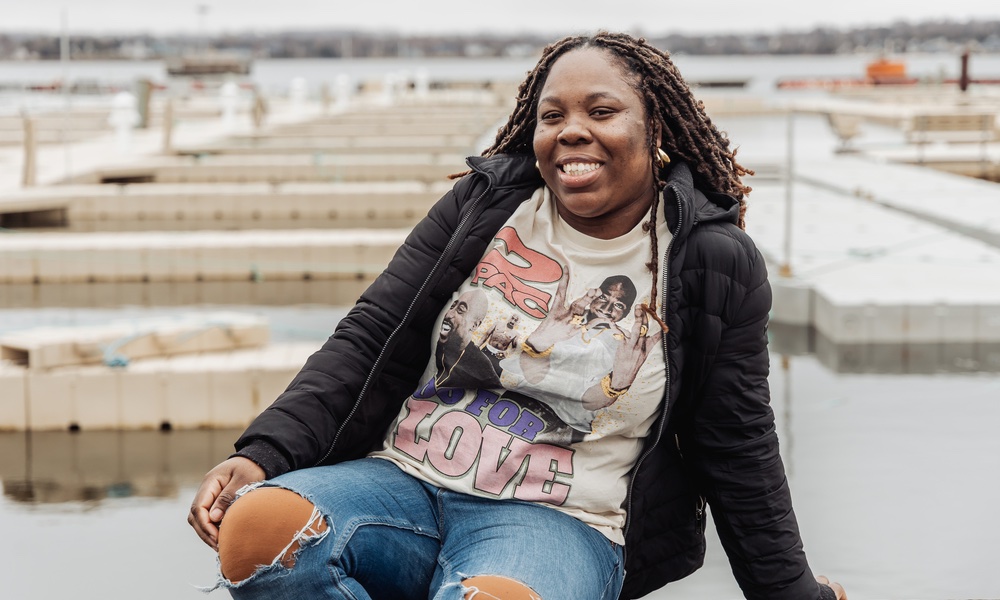
What's unique about UPEI and Prince Edward Island, in your experience?
What stands out to me most about University of Prince Edward Island is the strong sense of community and engagement among students and faculty. There are frequent academic events, workshops, and lectures that encourage students to stay involved beyond the classroom. These opportunities create spaces for learning, discussion, and networking, which contribute to a well-rounded academic experience.
Prince Edward Island itself has also shaped my experience in meaningful ways. When I first arrived, adjusting to the slower pace of life was challenging. Coming from Jamaica, where life often feels faster paced, the quietness initially felt unfamiliar. Over time, however, I learned to appreciate that slower rhythm. The Island’s scenery and landscape are beautiful and the calm environment has allowed me to reflect more deeply and stay focused on my academic goals. It has also helped me value balance and recognize the benefits of living in a peaceful and supportive environment.
What would you tell a student considering the MAIS program at UPEI?
Don't second guess your decision. It is a program that challenges students intellectually and encourages growth across multiple areas of study. One of the strengths of the program is its multidisciplinary nature. Students come from diverse academic backgrounds: anthropology, geography, economics, sociology, political science, biology and others which creates rich classroom discussions and exposes students to a wide range of perspectives.
The program encourages students to move beyond surface-level understanding and engage with the deeper structural forces that shape island societies, including governance systems, economic development and environmental vulnerability. It does not focus only on islands as physical spaces but examines how island communities function socially, politically, and environmentally. For me, the program has helped put many global issues into perspective and strengthened my understanding of how governance systems operate in real world contexts.
How has UPEI and the MAIS program prepared you for your future?
UPEI and the MAIS program are preparing me for my future by strengthening my academic, research and analytical skills through both coursework and applied learning opportunities. The program encourages students to think critically about governance and policy issues and to analyze complex social and political challenges. This is especially important to me because my longterm goal is to work in public policy.
One core course in the Island Studies program is Theory and Practice in Island Research, which includes a practicum component. This practicum allows students to work alongside professionals in their fields and apply theoretical knowledge in practical settings. Through activities such as drafting policy briefs, conducting research, and undertaking comparative studies, students gain valuable hands-on experience. It also helps build professional connections and develop skills that are directly transferable to future careers.
Most recently, I was offered a position with the Department of Island Studies as a Research Assistant, which I will begin shortly. In this role, I will support research related to land use in Prince Edward Island, contributing to ongoing discussions surrounding the Island’s Land Use Strategy. Having the opportunity to participate in this type of work is an important step in my professional development, as it will allow me to engage directly with policy-relevant issues and strengthen my research capabilities.
One essential aspect of my experience has been the confidence I have gained since joining the program. The MAIS program encourages independence, critical thinking, and self-reflection. It challenges students to engage with difficult questions and develop their own perspectives. As an international student, adjusting to a new academic and cultural environment can be challenging, but the supportive atmosphere at UPEI has made that transition much smoother. The relationships I have built with classmates, faculty, and staff have played an important role in both my academic progress and personal development. Looking back, the program has not only strengthened my academic direction but has also helped me grow in confidence and resilience.


