UPEI welcomes international cohort for intensive real estate management course
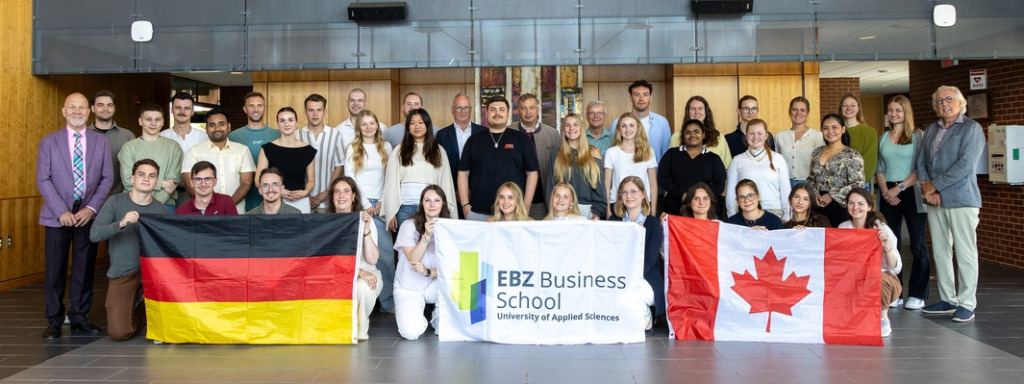
The University of Prince Edward Island’s McDougall Faculty of Business (MFoB) recently offered an intensive two-week International Real Estate Management course led by business professor Dr. Jürgen Krause. Modelled after UPEI’s Maymester program, where UPEI students take an experiential-learning-based short course abroad, this course was delivered in reverse, bringing together an international cohort of 32 university students from EBZ Business School in Bochum, Germany, and three students from UPEI in Charlottetown.
The program, which ran from July 20 to July 31, 2026, provided students with a rigorous academic and practical exploration of the global real estate sector with special emphasis on Canada and PEI. Designed to prepare future experts and leaders in international contexts, the curriculum examined how political and economic developments, artificial intelligence, geopolitical challenges, and environmental and sustainability realities are transforming real estate value and strategic approaches.
Participants gained practical knowledge, business acumen, and strategic skills through hands-on learning, guest lectures, and presentations from industry experts and community leaders. Speakers included professors from UPEI and EBZ Business School as well as German and local business experts in the real estate profession. Topics ranged from residential and commercial financing strategies to new technologies, sustainability, and resilience in international markets.
“Real estate is no longer just about bricks and mortar; it is about navigating global shifts, embracing artificial intelligence, and building sustainable spaces,” said Dr. Krause. “From Prince Edward Island to the global stage, students in this cohort have demonstrated their capacity to understand the forces transforming property value and their potential to take leadership roles in the future of the international real estate sector.”
Dr. Krause thanked the speakers who supported the program and mentored the next generation of industry experts.
In addition to core academic concepts, the program emphasized intercultural collaboration, teamwork, and experiential learning, giving students valuable opportunities to practice strategic decision-making and communication skills within an international peer network.
Dr. Tina Saksida, Acting Dean of the MFoB, welcomed the guests and students, and Dr. Krause and Dr. Ulrich Nack, professor and university lecturer at EBZ, opened the course by reviewing the history of their institutions. Phil Muise, co-owner of HomeLife PEI Realty Inc., gave the first guest lecture, describing the history and development of the residential real estate market on PEI. Dr. Annerose Mauz, sessional instructor, McDougall Faculty of Business, addressed cultural differences in communication and real estate management, and Markus Neundörfer, Südzucker Sugar Division in Mannheim, Germany, spoke about the role of the Chief Financial Officer in real estate management in today’s large enterprises. Kevin Murphy CM, co-founder of the Murphy Hospitality Group, described a model for the alignment of history, heritage, and culture with real estate development, followed by Joshua Egan, partner with the law firm Carr, Stevenson & MacKay, outlining real estate laws and regulations in Canada and more specifically in PEI. Erica Stanley, an international student advisor at UPEI, outlined federal and provincial immigration regulations.
Engineering professors Dr. Viktor Grinewitschus from EBZ in Germany and Dr. Kuljeet Grewal from UPEI, co-taught several sessions on energy systems, efficiency, and sustainability, while Duncan Shaw, entrepreneur and sessional lecturer at UPEI, spoke about Canadian rent controls and their impacts. Gordon McNeilly, MLA for District # 14, Charlottetown–West Royalty, addressed affordable housing scenarios in PEI, and Scott McEwen, Senior Vice-President and Senior Managing Director of Alternative Assets for VAS CBRE, the largest real estate services company in Canada, gave an introduction to commercial real estate and alternative asset valuation.
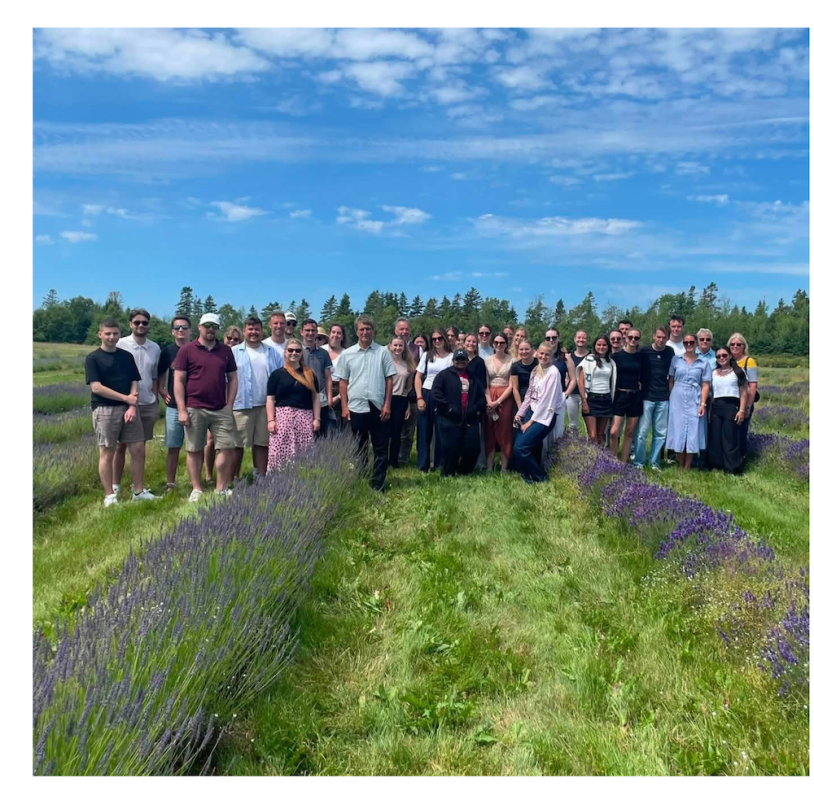
Experiential field trips exposed the students to practical applications of sustainable land use and infrastructure. On July 22, the cohort travelled to the North Cape Windmill Research Centre and Windmill Museum to learn about renewable energy infrastructure in the coastal development context.
On July 27, students visited development properties in Charlottetown, and Cassidy Farms in Hampton, PEI. Owner Mike Cassidy gave them a first-hand look at urban development and sustainable agricultural operations, coastal erosion management, and land stewardship, demonstrating how environmental resilience and sustainable farming practices directly impact long-term real estate value in urban and coastal regions.
On the evening of July 28, Murphy toured the students through the PEI Brewing Company, and on July 29, Steve Bellamy, CEO, Confederation Centre of the Arts, took them through the Centre’s Art Gallery and Sobey Family Theatre as well as the major expansion project currently under construction.
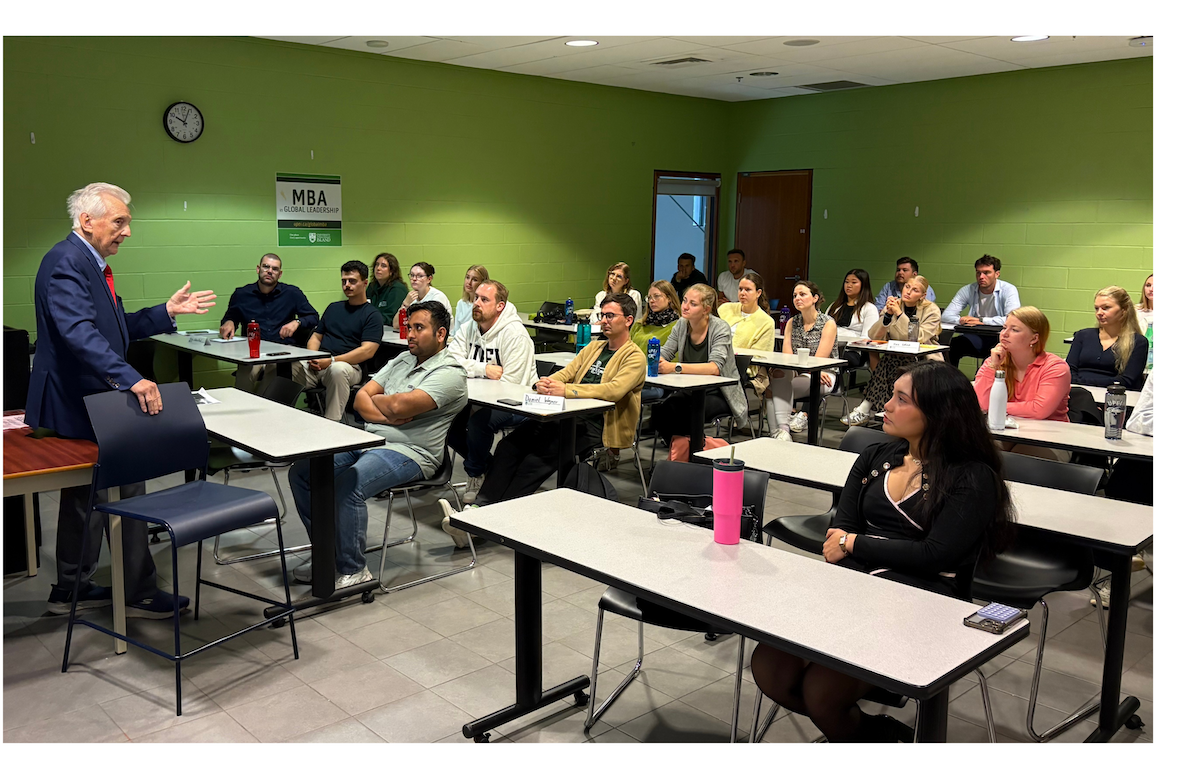
On July 31, Dr. Don McDougall, well-known business leader, entrepreneur, philanthropist, and a UPEI honorary degree recipient and former Chancellor, delivered a presentation titled “Culture in Business Leadership with Special Reference to Real Estate.” In recognition of a significant gift from McDougall and his wife Marion, UPEI's Faculty of Business was named the McDougall Faculty of Business in 2024.
Reflecting on decades of experience, McDougall highlighted the role of both preparation and opportunity in real estate success. He shared lessons learned from commercial office properties in Detroit, a Colorado ski resort development, and the ongoing growth of the Mill River Resort and the Eagles Glenn golf course on PEI, noting that strategic land holdings often provide flexibility and long-term value.
The program concluded on July 31 with the presentation of Murphy’s book The Passionate Hosts to each student.
Dr. Krause said the successful completion of the course highlights UPEI’s ongoing commitment to fostering global academic partnerships, cross-cultural knowledge exchange, and practical, future-focused education.