

Strategic pathways to meeting PEI’s 2040 net-zero electricity demand
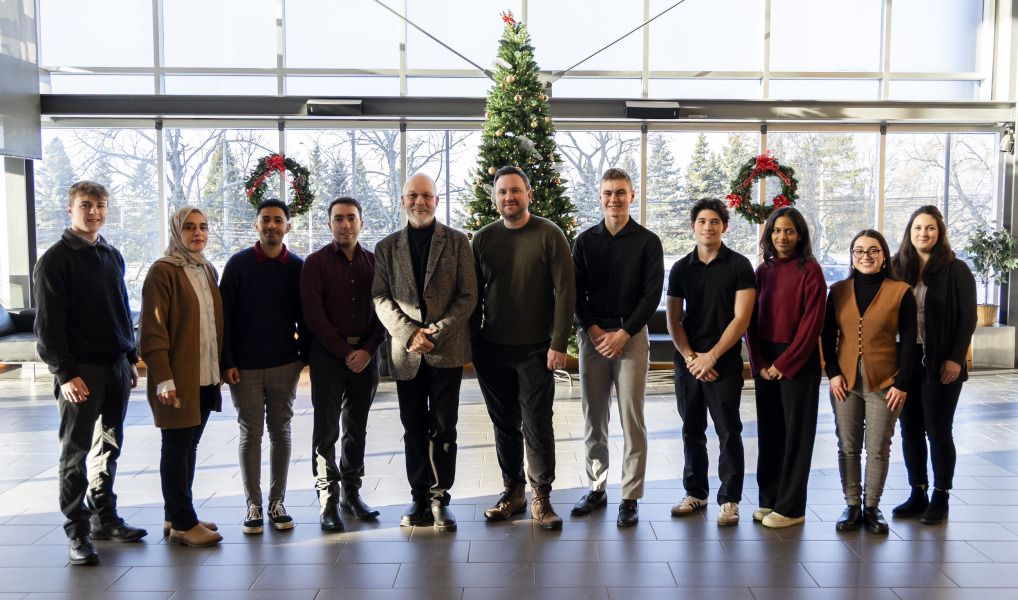
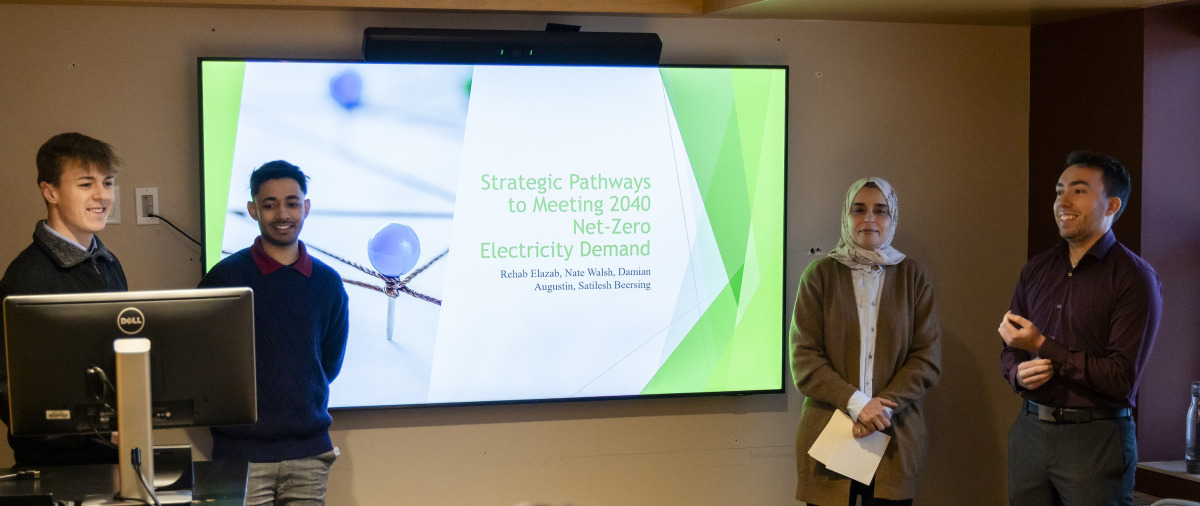
In early December, two teams from the McDougall Faculty of Business Strategic Management course (BUS-3910), led by Dr. Jürgen Krause, presented their strategic solutions for meeting the 2040 net-zero electricity demand in Prince Edward Island (PEI).
Representatives from the Office of Net Zero at the PEI Department of Environment, Energy, and Climate Action provided feedback on team presentations in the 2025 winter semester about how the teams’ transportation and parking strategy proposals aligned with provincial sustainability goals. Logan Dawson, provincial Net-Zero Transportation Coordinator, commented at that time that the students did an excellent job and that the provincial government would happily provide feedback on future projects related to similar topics.
This new project took shape when Dr. Krause connected with Derek Ellis, Director, Sustainability Division, and Glen Compton, Net-Zero Coordinator, Environment, Energy and Climate Action, to discuss how business students could support PEI’s net-zero initiative. Students were tasked with answering the question: “How should PEI meet its electricity demand as it rapidly electrifies to meet its 2040 net-zero target?”
Several students were excited about the opportunity and volunteered to tackle the strategic question. From the selected students, two teams were formed to develop and present their proposed strategic approaches and options. Students learned to examine how PEI can balance growth, reliability, and decarbonization in electricity provision as it moves toward its 2040 net-zero goal.
Compton gave a presentation and provided key information and resources to the teams, which outlined the provincial strategy, its current energy mix, and the regulatory framework within which they would be working. Both teams appreciated the importance of this experiential learning opportunity and embraced the challenge.
The teams’ presentations, which took place in Don and Marion McDougall Hall at UPEI, addressed issues such as heavy dependence on energy imports from neighbouring provinces, aging undersea cables and grid infrastructure, insufficient energy storage options, and a small tax base due to PEI’s smaller population. Their suggestions included improving energy efficiency (decreasing consumption) of homes using free provincial and federal programming, utilizing smart meters through Maritime Electric to lower demand at peak consumption times, and creating closer partnerships with neighbouring provinces that are investing in renewable energy production.
Both teams demonstrated the need to diversify strategies to be able to approach or meet the province’s net-zero goal by 2040.
Compton provided feedback to the teams, recognizing that the students had a solid understanding of the issues currently at play. He confirmed and emphasized the need for greater collaboration with other provinces. He also noted that sustainability efforts must be diversified so the province can focus on the strategies that are most effective while also learning how to retrofit existing infrastructure rather than starting from scratch. He further stressed that diversifying approaches to sustainability and reducing energy consumption is critical, adding that PEI must work to significantly reduce its per-capita energy use.
“This was obviously a complex and demanding topic to take on with a lot of contributing aspects. The students comprehended the context well and put in an enormous effort to address and present many diverse solution options. This was acknowledged by the government expert, and Mr. Compton complimented the teams for their good understanding, thorough analyses, and valid suggestions,” said Krause. “The teams represented the UPEI McDougall Faculty of Business again very well.”
Congratulations to both teams from the BUS-3910 Strategic Management course!
BUS 3920-2: Rehab Elazab, Nate Walsh, Damian Augustin, and Satilesh Beersing.
BUS 3910-3: Bheemluxmee Damry, Yoelle Ragazzo Calderon, Noah Visser, and Alexander De Padua.