





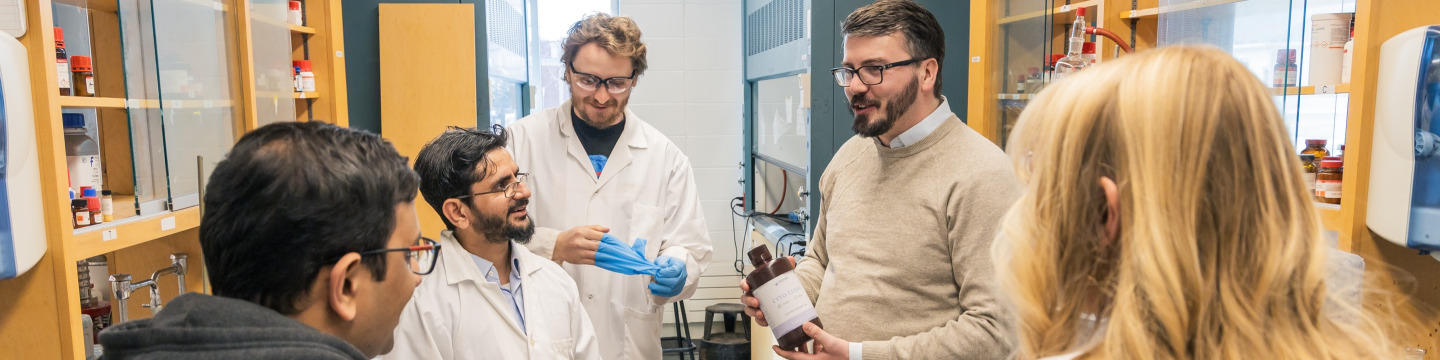
"Everything we've built is a result of the foundation laid at UPEI."
What brought you to UPEI? Why did you choose to study here?
I'm from Toronto, Ontario, and I moved to PEI when I was young. I went to Colonel Gray High School in Charlottetown, played soccer, and was named Athlete of the Year before I graduated. I was much more focused on athletics than academics in high school, but I planned to take engineering in at UPEI. When I realized that engineering labs conflicted with UPEI's soccer schedule, I enrolled in the Chemistry program.
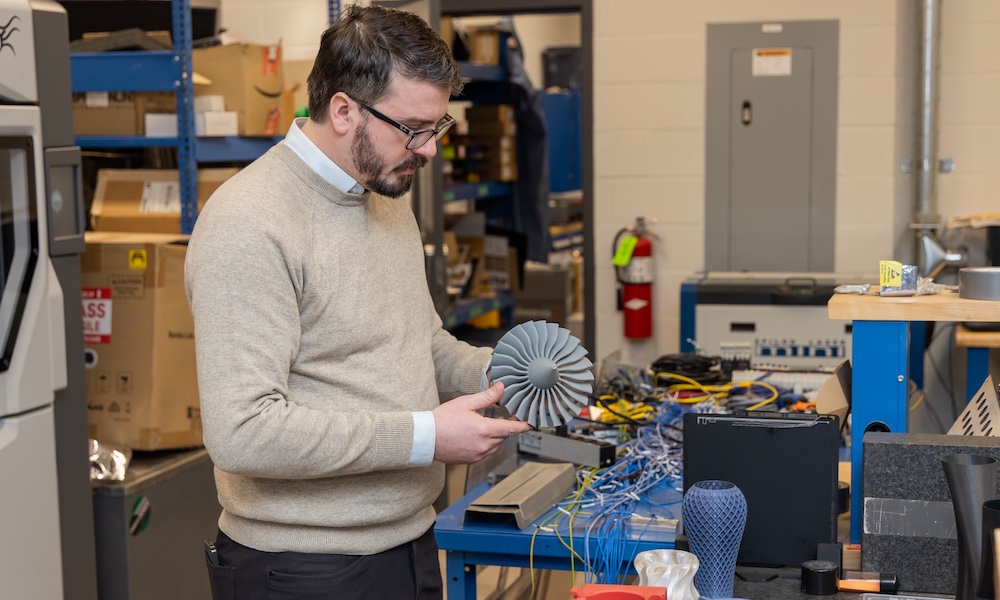
My honours project really got me interested in research—I was working on battery materials, working with environmentally inorganic materials inside of not just a fume hood but a dry box that prevents reactions with air. As I moved into my graduate studies, UPEI's Faculty of Sustainable Design Engineering was just taking off and some of the new professors there were doing very interesting things with more organic and sustainable projects. To make a long story short, I threw around a bunch of ideas for projects, and I really wanted to work with Drs. Bishnu Acharya and Rabin Bissessur, and the work they were doing in "waste-to-resource" biomass valorization. We settled on tunicates, and that's how it all started.
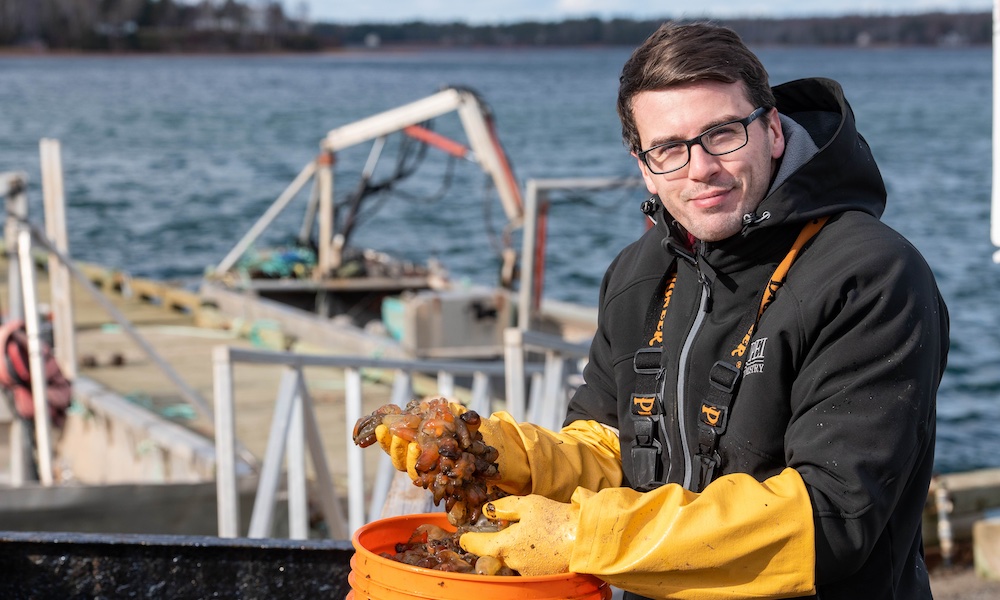
Tunicates were interesting because nobody seemed to be doing anything with them, and they were kind of unique in nature as they grow cellulose and are the only animal to do it. So my research thesis was based on the scalable extraction and utilization of these materials and over the period of my PhD, I realized that there was potentially a business here. After I finished, I went out to industry and sought some investments, and that's what allowed us to start Tunistrong, Inc. It's a partnership between myself and a couple of different aquaculture stakeholders, primarily the owners of Prince Edward Aquafarms.
What do you find unique and interesting about UPEI's Chemistry and Graduate Science programs?
The opportunities I had as an undergraduate and graduate student are unique to UPEI: the close proximity of facilities and labs, the hands-on work with faculty experts and industry partners, and the ability to shape my own path as an entrepreneur supported by the Faculty of Science, the Faculty of Sustainable Design Engineering, and McDougall Faculty of Business. Being able to consider the commercialization of our research and use what I had learned in the business components of my graduate studies sort of crystallized that there is something meaningful here. I had the potential to make something in the real world with my research and being here in this environment allowed me to weigh whether it was something I wanted to do or whether I wanted to go and just take a job somewhere.
"At the end of the day it's UPEI's close-knit community, the close-knit nature of studying and working here. I was able to work with all of the different analytical instruments in every building, test my own samples, walk 30 seconds to the next building and do some work over there, walk across campus to the Faculty of Sustainable Design Engineering and do some machining or fabrication."
Companies can come and do effective work at UPEI—there's a great cohort of students, not just in Chemistry, but across campus in Sustainable Design Engineering, Physics, Biology, and other departments as well. I've been able to come back and work with current UPEI students, and those students have opportunities to with our company and others. Honours students in this lab we're in today in the K. C. Irving Chemistry Centre work with secondary companies to develop potential commercial products. It's unique that UPEI science students have input into the real-world problems we're trying to solve.
How has Tunistrong benefitted from UPEI's influences?
So far, we've processed 73 tons of tunicates into products and we expect to scale our production to 100 tons annually. We're also growing our employee base every year—we have two full-time employees now and will have five by the end of 2026. And of course, we have the students here at UPEI participating in projects we help fund through a program called Mitacs. Tunistrong has access to great UPEI students and research and commercialization funds, which can be a great benefit to our company. Everything we’ve built is a result of the foundation laid at UPEI.
How did your time as a UPEI student contribute to where you are now?
It's the only reason I am where I'm at now, I think. At the end of the day it's UPEI's close-knit community, the close-knit nature of studying and working here. I was able to work with all of the different analytical instruments in every building, test my own samples, walk 30 seconds to the next building and do some work over there, walk across campus to the Faculty of Sustainable Design Engineering and do some machining or fabrication. I could test and fail and test and fail over and over while constantly improving, which I think is whole different experience at UPEI than some of the other places I've been.
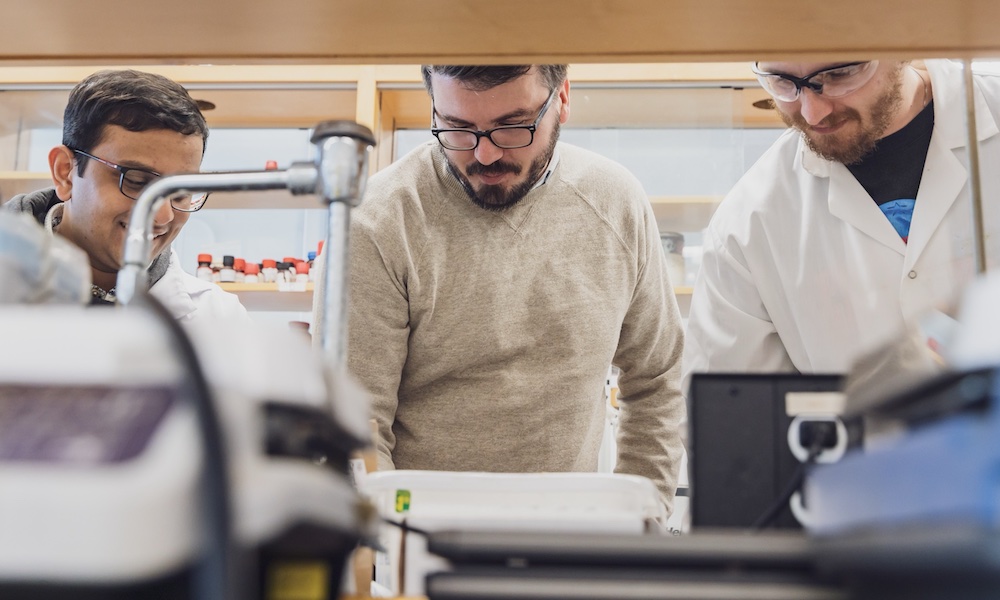
The network of people that you connect with in this kind of close-knit community allows you to not just better navigate campus when you're here, but you can leverage those contacts to help you in whatever your next stage is, whether you'd be working as an employee somewhere, starting a company, going abroad to do something far more interesting than either of those scenarios, but at UPEI you always have a community you can come back to and work with. A good example of this occurred when I spent four months at the Forest Product Laboratory in Madison, Wisconsin. It's a USDA National Lab, and it's where they initially extracted CNCs from wood. Back in the day when this was started, the first pilot plant was there, and the original engineers that worked on that pilot plant were there as well, so there was a wealth of information available to me from the very inception of this industry. I was able to bring some materials with me, process those materials in their pilot plant with their engineers, and people who really know what they're doing. We collaborated on products, did some science, and write some pretty cool papers. This kind of experience, isn't just a one-off, and anybody else completing a graduate program here at UPEI would have the same access.


