
Services for:
Choose a category:
Choose a service:
  •  
  •  
  •  
"To study biology is to study life."

Biology

Careers:
  • Laboratory Technician
  • Human Medicine
  • Conservation Officer
  • Environmental Activist
  • Veterinary Medicine
The Department of Biology is located in the Duffy Science Centre.
(902) 566-0551

The Biology Department at UPEI has a strong tradition of helping people realize their potential through deep consideration of the biological world. A scientific understanding of the plants and animals is, in many ways, its own reward. But it is also a pathway to a large number of exciting and fulfilling career opportunities. A biology program is a common route toward the health professions (human and veterinary medicine, dentistry, physiotherapy, etc.), for which we offer strong pre-professional programs. It can also lead to careers in environmental analysis, biotechnology, laboratory diagnostics, and many other things. Biology graduates also often establish other sorts of careers (lawyer, business professional) for which the knowledge of biology can be a strong personal and professional asset.

The strength of our educational programs derive from the strength of our scholarly activity and research. Our faculty hold grants from the Natural Sciences and Research Council of Canada, Canada Foundation for Innovation, Atlantic Innovation Foundation, Canadian Institutes of Health Research, and Prince Edward Island Health Research Institute, among others. Our faculty have research programs in neurobiology, arctic insect ecology, cancer cell biology, watershed ecology, pollination biology, coastal habitat ecology, animal habitat fragmentation, heart and stroke physiology, aquatic toxicology, plant ecological genetics, among others.
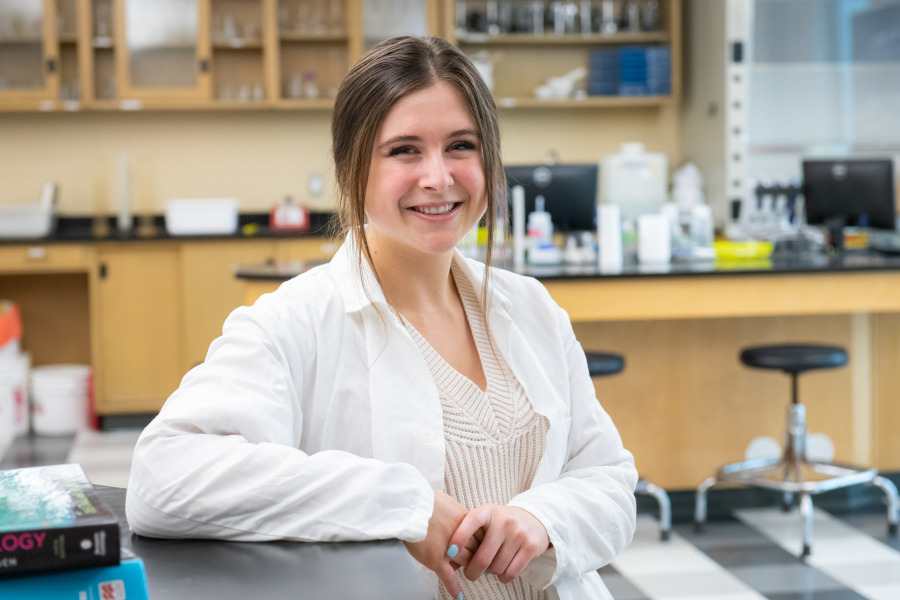
Dr. Marva Sweeney-Nixon
UPEI Department of Biology
Careers:
  • Laboratory Technician
  • Human Medicine
  • Conservation Officer
  • Environmental Activist
  • Veterinary Medicine
The Department of Biology is located in the Duffy Science Centre.
(902) 566-0551

The Honours program in Biology is designed to provide research experience at the undergraduate level within the BSc program. It is available to students with a strong academic background who intend to continue studies at the postgraduate level in Biology or some related field, or to students who intend to pursue a career where research experience would be an asset. Students may also carry out a less intensive research project by registering for Biology 440.

The Honours program differs from the BSc Major program in having a research and thesis component. The total number of courses is the same, five courses per semester for eight semesters, but the honours thesis course counts as 12 credits, so the total semester hours of credit for the Honours is 126, compared to 120 hours for the BSc Major. The research component is to be completed within the BSc program and would normally require the equivalent of one summer (four months) preceding the graduating year. Evaluation of the research data and writing of the thesis would normally be done during the fall and/or spring session in Biology 490: Advanced Research and Thesis.

Course Requirements 

Students may complete an Honours Degree in any of the three Biology streams (General, Life Sciences, Environmental Biology). The program is the same as the Majors program for the first three years, with the addition of two other Biology electives (taken from any stream, though students specializing in the Life Sciences or Environmental Biology streams may have to choose electives in those areas) and Biology 490. These would normally be completed in the student’s fourth year. 

Fourth Year

  • Two Biology electives at 400 level (these must be in the Life Sciences or Environment Biology lists if students have declared a specialty)
  • Two additional Biology electives at the 200 level or above 
  • Biology 490 (Advanced Research and Thesis) 
  • Electives (6 credit hours)

Note: at least four of the required Biology electives must have a laboratory component in all streams. 

Entrance Requirements 

For admission to the Honours program or Honours Conversion program, students should have a combined minimum average of 75% in all previous courses taken in the second and third years of study; and a combined minimum average of 75% in all previous biology courses taken. Permission of the Department is also required and is contingent on the student finding a thesis advisor, on being assigned an advisory committee, on acceptance of the research project by the Biology Department, and on general acceptability. Students interested in doing Honours should consult with the Departmental Chair as early as possible and apply to the program no later than 31 March of the student’s third year.

Performance 

To graduate with a BSc Honours in Biology, students must complete 126 semester hours of credit which includes 12 semester hours of credit for the research and thesis, attain a minimum average of 75% in all Biology courses combined, and achieve a minimum overall average of 70% in all courses submitted for the degree. Students failing to meet these requirements may transfer their program to the BSc Biology Program or to other degree programs.
Note: Detailed information to students on the Honours Program is available from the Department.

Careers:
  • Laboratory Technician
  • Human Medicine
  • Conservation Officer
  • Environmental Activist
  • Veterinary Medicine
The Department of Biology is located in the Duffy Science Centre.
(902) 566-0551

A student enroled in the Majors program in Biology will complete a minimum of 42 semester hours in Biology, and additional courses in Chemistry, Physics and Mathematics according to the program outlined below. Students may choose to take a general Biology degree or to obtain a Life Sciences or Environmental Biology specialization. The Life Sciences specialization will focus on cell & molecular biology as well as the biomedical sciences, and may be of interest to students who intend to pursue careers or graduate opportunities related to the health professions, or research/innovation in biomedical or biotechnological sciences. The Environmental Biology specialization will focus on the interaction of plants and animals with the environment and may be selected by students interested in careers or graduate studies related to conservation, wildlife biology or ecology. The General Biology stream will give students a broad background in biology, with good preparation for all areas of Biology.
Specialization

Students may apply for a particular specialization any time before the end of their third year. Those that have not specified a specialization must meet the requirements for the General Biology Stream.

General Biology (no specialization):

8 core Biology courses:
Biology 131-132
Two of Biology 202, 204, and 206
Two of Biology 221, 222, and 223
Biology 326 or 382
Biology 331
at least 6 additional Biology electives that fit the following criteria:

  • at least two (2) must be at the 400 level;
  • four (4) must have a lab component

Required courses in other departments, and electives as listed in the section “All specializations – Required Courses in other departments” below.

Life Sciences Specialization

8 core Biology courses
Biology 131-132
Two of Biology 202, 204, and 206
Biology 221 and 223
Biology 326
Biology 331

at least 6 additional Biology electives at or above the 200-level that fit the following criteria:

  • at least two (2) must be at the 400 level and be from Life Sciences;
  • four (4) must have a lab component;
  • at least four (4) must be selected from the Life Sciences Specialization lists;
  • at least two (2) must be selected from the Environmental or General Biology lists

Required courses in other departments, and electives as listed in the section “All specializations – Required Courses in other departments” below.

Environmental Biology

8 core Biology courses:
Biology 131/132 6
Two of Biology 202, 204, and 206
Biology 222 and 223
Biology 331
Biology 382

at least 6 additional Biology electives at or above the 200-level that fit the following criteria:

  • at least two (2) must be at the 400 level from the Environmental Biology list
  • four (4) must have a lab component
  • at least four (4) must be selected from the Environmental Biology Specialization list
  • at least two (2) must be selected from the Life Sciences or General Biology lists

Required courses in other departments, and electives as listed in the section “All specializations – Required Courses in other departments” below.

All Specializations
Required courses from other departments:

Global Issues 151

Chemistry:
Chemistry 111 and 112
Chemistry 241-242 or Chemistry 243 (credit will not be given for both Chem 243 and Chem 241 or 242)
Chemistry 353 is required for the General stream and Life Sciences; Chem 353 or 202 for Environmental Biology

Physics:
Physics 121 (or 111) and 122 (or 112) 6

Mathematics & Statistics:
Math 112 or Math 151/152 3 or
Math 221
Note: Some students may wish to take upper level Mathematics, Chemistry, or Physics courses for which Mathematics 151-152 is required: therefore Mathematics 151-152 may be taken in place of Mathematics 112 but the statistics requirement of Mathematics 221 remains. Credit will not be given for both Mathematics 112 and Mathematics 151 or 152.

Other electives:
The remaining number of semester hours required to complete the requirements for the Biology major will be made up from courses selected by the students. 45, 48 or 51.

Careers:
  • Laboratory Technician
  • Human Medicine
  • Conservation Officer
  • Environmental Activist
  • Veterinary Medicine
The Department of Biology is located in the Duffy Science Centre.
(902) 566-0551

To qualify for a minor, students must complete a total of 21 semester hours of credit in Biology, 15 semester hours of which are required courses.  The requirements for a minor in Biology are:

Biology Core Courses:
Biology 131-132 6 credit hours
Biology 202, 204 6 credit hours

One of Biology 206, 221, 222, 223 (3 credit hours)

Biology Electives at 200 level or above (6 credit hours)

Careers:
  • Laboratory Technician
  • Human Medicine
  • Conservation Officer
  • Environmental Activist
  • Veterinary Medicine
The Department of Biology is located in the Duffy Science Centre.
(902) 566-0551
  • Lawrence R. Hale (Chair) - Associate Professor, Chair
  • J. Charles Cheverie - Professor Emeritus
  • Louis A. Hanic - Professor Emeritus
  • Donna J. Giberson - Professor
  • Christian R. Lacroix - Professor
  • Michael R. van den Heuvel - Professor
  • Robert Hurta - Associate Professor
  • James R. Kemp - Associate Professor
  • Pedro Quijon - Associate Professor
  • Marina B. Silva-Opps - Associate Professor
  • Marva I. Sweeney-Nixon - Associate Professor
  • Kevin L. Teather - Associate Professor
  • H. Carolyn Peach Brown - Assistant Professor
  • Tracy Doucette - Assistant Professor
  • Karen Samis, Assistant Professor
  • David Cairns, Adjunct Professor
  • Bourlaye Fofana, Adjunct Professor
  • Daryl L. Guignion, Adjunct Professor
  • Natacha Hogan, Adjunct Professor
  • Karen Kidd, Adjunct Professor
  • Sean Li, Adjunct Professor
  • Jason McCallum, Adjunct Professor
  • David McCorquodale, Adjunct Professor
  • Gerhard Pohle, Adjunct Professor
  • Jennifer Slemmer, Adjunct Professor
Overview

The Biology Department at UPEI has a strong tradition of helping people realize their potential through deep consideration of the biological world. A scientific understanding of the plants and animals is, in many ways, its own reward. But it is also a pathway to a large number of exciting and fulfilling career opportunities. A biology program is a common route toward the health professions (human and veterinary medicine, dentistry, physiotherapy, etc.), for which we offer strong pre-professional programs. It can also lead to careers in environmental analysis, biotechnology, laboratory diagnostics, and many other things. Biology graduates also often establish other sorts of careers (lawyer, business professional) for which the knowledge of biology can be a strong personal and professional asset.

The strength of our educational programs derive from the strength of our scholarly activity and research. Our faculty hold grants from the Natural Sciences and Research Council of Canada, Canada Foundation for Innovation, Atlantic Innovation Foundation, Canadian Institutes of Health Research, and Prince Edward Island Health Research Institute, among others. Our faculty have research programs in neurobiology, arctic insect ecology, cancer cell biology, watershed ecology, pollination biology, coastal habitat ecology, animal habitat fragmentation, heart and stroke physiology, aquatic toxicology, plant ecological genetics, among others.

UPEI Department of Biology
Dr. Marva Sweeney-Nixon
Honours

The Honours program in Biology is designed to provide research experience at the undergraduate level within the BSc program. It is available to students with a strong academic background who intend to continue studies at the postgraduate level in Biology or some related field, or to students who intend to pursue a career where research experience would be an asset. Students may also carry out a less intensive research project by registering for Biology 440.

The Honours program differs from the BSc Major program in having a research and thesis component. The total number of courses is the same, five courses per semester for eight semesters, but the honours thesis course counts as 12 credits, so the total semester hours of credit for the Honours is 126, compared to 120 hours for the BSc Major. The research component is to be completed within the BSc program and would normally require the equivalent of one summer (four months) preceding the graduating year. Evaluation of the research data and writing of the thesis would normally be done during the fall and/or spring session in Biology 490: Advanced Research and Thesis.

Course Requirements 

Students may complete an Honours Degree in any of the three Biology streams (General, Life Sciences, Environmental Biology). The program is the same as the Majors program for the first three years, with the addition of two other Biology electives (taken from any stream, though students specializing in the Life Sciences or Environmental Biology streams may have to choose electives in those areas) and Biology 490. These would normally be completed in the student’s fourth year. 

Fourth Year

  • Two Biology electives at 400 level (these must be in the Life Sciences or Environment Biology lists if students have declared a specialty)
  • Two additional Biology electives at the 200 level or above 
  • Biology 490 (Advanced Research and Thesis) 
  • Electives (6 credit hours)

Note: at least four of the required Biology electives must have a laboratory component in all streams. 

Entrance Requirements 

For admission to the Honours program or Honours Conversion program, students should have a combined minimum average of 75% in all previous courses taken in the second and third years of study; and a combined minimum average of 75% in all previous biology courses taken. Permission of the Department is also required and is contingent on the student finding a thesis advisor, on being assigned an advisory committee, on acceptance of the research project by the Biology Department, and on general acceptability. Students interested in doing Honours should consult with the Departmental Chair as early as possible and apply to the program no later than 31 March of the student’s third year.

Performance 

To graduate with a BSc Honours in Biology, students must complete 126 semester hours of credit which includes 12 semester hours of credit for the research and thesis, attain a minimum average of 75% in all Biology courses combined, and achieve a minimum overall average of 70% in all courses submitted for the degree. Students failing to meet these requirements may transfer their program to the BSc Biology Program or to other degree programs.
Note: Detailed information to students on the Honours Program is available from the Department.

Major

A student enroled in the Majors program in Biology will complete a minimum of 42 semester hours in Biology, and additional courses in Chemistry, Physics and Mathematics according to the program outlined below. Students may choose to take a general Biology degree or to obtain a Life Sciences or Environmental Biology specialization. The Life Sciences specialization will focus on cell & molecular biology as well as the biomedical sciences, and may be of interest to students who intend to pursue careers or graduate opportunities related to the health professions, or research/innovation in biomedical or biotechnological sciences. The Environmental Biology specialization will focus on the interaction of plants and animals with the environment and may be selected by students interested in careers or graduate studies related to conservation, wildlife biology or ecology. The General Biology stream will give students a broad background in biology, with good preparation for all areas of Biology.
Specialization

Students may apply for a particular specialization any time before the end of their third year. Those that have not specified a specialization must meet the requirements for the General Biology Stream.

General Biology (no specialization):

8 core Biology courses:
Biology 131-132
Two of Biology 202, 204, and 206
Two of Biology 221, 222, and 223
Biology 326 or 382
Biology 331
at least 6 additional Biology electives that fit the following criteria:

  • at least two (2) must be at the 400 level;
  • four (4) must have a lab component

Required courses in other departments, and electives as listed in the section “All specializations – Required Courses in other departments” below.

Life Sciences Specialization

8 core Biology courses
Biology 131-132
Two of Biology 202, 204, and 206
Biology 221 and 223
Biology 326
Biology 331

at least 6 additional Biology electives at or above the 200-level that fit the following criteria:

  • at least two (2) must be at the 400 level and be from Life Sciences;
  • four (4) must have a lab component;
  • at least four (4) must be selected from the Life Sciences Specialization lists;
  • at least two (2) must be selected from the Environmental or General Biology lists

Required courses in other departments, and electives as listed in the section “All specializations – Required Courses in other departments” below.

Environmental Biology

8 core Biology courses:
Biology 131/132 6
Two of Biology 202, 204, and 206
Biology 222 and 223
Biology 331
Biology 382

at least 6 additional Biology electives at or above the 200-level that fit the following criteria:

  • at least two (2) must be at the 400 level from the Environmental Biology list
  • four (4) must have a lab component
  • at least four (4) must be selected from the Environmental Biology Specialization list
  • at least two (2) must be selected from the Life Sciences or General Biology lists

Required courses in other departments, and electives as listed in the section “All specializations – Required Courses in other departments” below.

All Specializations
Required courses from other departments:

Global Issues 151

Chemistry:
Chemistry 111 and 112
Chemistry 241-242 or Chemistry 243 (credit will not be given for both Chem 243 and Chem 241 or 242)
Chemistry 353 is required for the General stream and Life Sciences; Chem 353 or 202 for Environmental Biology

Physics:
Physics 121 (or 111) and 122 (or 112) 6

Mathematics & Statistics:
Math 112 or Math 151/152 3 or
Math 221
Note: Some students may wish to take upper level Mathematics, Chemistry, or Physics courses for which Mathematics 151-152 is required: therefore Mathematics 151-152 may be taken in place of Mathematics 112 but the statistics requirement of Mathematics 221 remains. Credit will not be given for both Mathematics 112 and Mathematics 151 or 152.

Other electives:
The remaining number of semester hours required to complete the requirements for the Biology major will be made up from courses selected by the students. 45, 48 or 51.

Minor

To qualify for a minor, students must complete a total of 21 semester hours of credit in Biology, 15 semester hours of which are required courses.  The requirements for a minor in Biology are:

Biology Core Courses:
Biology 131-132 6 credit hours
Biology 202, 204 6 credit hours

One of Biology 206, 221, 222, 223 (3 credit hours)

Biology Electives at 200 level or above (6 credit hours)

Faculty
  • Lawrence R. Hale (Chair) - Associate Professor, Chair
  • J. Charles Cheverie - Professor Emeritus
  • Louis A. Hanic - Professor Emeritus
  • Donna J. Giberson - Professor
  • Christian R. Lacroix - Professor
  • Michael R. van den Heuvel - Professor
  • Robert Hurta - Associate Professor
  • James R. Kemp - Associate Professor
  • Pedro Quijon - Associate Professor
  • Marina B. Silva-Opps - Associate Professor
  • Marva I. Sweeney-Nixon - Associate Professor
  • Kevin L. Teather - Associate Professor
  • H. Carolyn Peach Brown - Assistant Professor
  • Tracy Doucette - Assistant Professor
  • Karen Samis, Assistant Professor
  • David Cairns, Adjunct Professor
  • Bourlaye Fofana, Adjunct Professor
  • Daryl L. Guignion, Adjunct Professor
  • Natacha Hogan, Adjunct Professor
  • Karen Kidd, Adjunct Professor
  • Sean Li, Adjunct Professor
  • Jason McCallum, Adjunct Professor
  • David McCorquodale, Adjunct Professor
  • Gerhard Pohle, Adjunct Professor
  • Jennifer Slemmer, Adjunct Professor
Careers: 
Laboratory Technician
Human Medicine
Conservation Officer
Environmental Activist
Veterinary Medicine
Course Level: 
100 Level
Courses: 

BIO 001 INTRODUCTION TO THE ESSENTIALS OF BIOLOGY
This is a non-credit course designed primarily for students needing an introduction to biological principles, as preparation for first year biology. Basic biological principles are introduced in relation to everyday applications, including industry and the environment. Topics include: components of cells, principles of metabolism, principles of genetics, principles of evolution and natural selection, plant and animal structure. Classes will be augmented by laboratory demonstrations. This course is required for those students planning to take Biology 131 and/or 132, and who did not take either Biology 11 or Biology 12 in high school.

BIO 101 ENVIRONMENTAL BIOLOGY
This course considers environmental problems from a biological perspective. Human ecology, populations, pollution, resource use and other topics are discussed critically.
Lectures and field trips to the equivalent of six hours a week

BIO 102 HUMAN BIOLOGY
An introductory course dealing with the structure and function of the human body. Course topics will include discussions on human sexuality, sexually transmitted diseases, human development, genetic disorders, integumentary, musculo-skeletal, digestive, respiratory, excretory, circulatory and nervous system design and function.
Three hours lecture, two hours laboratory a week.

BIO 121 HUMAN ANATOMY
This course deals with structural levels of organization of the human body and is designed for students in the Nursing program. The gross anatomy and histology of the integumentary, skeletal, muscular, nervous, endocrine, cardiovascular, respiratory, lymphatic, digestive, urinary and reproductive system of humans is surveyed.
PREREQUISITE: Restricted to students in the Nursing program
Three hours lecture, 2.5 hours laboratory a week

BIO 122 HUMAN PHYSIOLOGY
This course deals with the functioning of the human body, and is designed for students in the Nursing program and the Department of Family and Nutritional Sciences. The physiology of the integumentary, skeletal, muscular, nervous, endocrine, cardiovascular, lymphatic, respiratory, digestive, urinary and reproductive systems is surveyed.
PREREQUISITE: Restricted to students in the Nursing program or Department of Family and Nutritional Sciences
Three hours lecture, 2.5 hours laboratory a week

BIO 131 INTRODUCTION TO CELL AND MOLECULAR BIOLOGY
This course provides an introduction to the science of Biology,with emphasis on the processes at the cellular and molecular level. The course covers the cellular nature of life, the physical basis of heredity, development and the chemistry of life.  Part of the laboratory component involves training in microscopy and molecular techniques.
PREREQUISITE:  Grade XI or XII Biology, Biology 001 or the permission of the Chair in special cases.
Three hours lecture, three hours laboratory a week

BIO 132 INTRODUCTION TO ORGANISMS
This course provides an introduction to the science of Biology, with emphasis on organismal biology and unifying themes. The course deals with evolution, the diversity of life, form and function, and ecology. Part of the laboratory component involves training in dissection techniques.
PREREQUISITE:  Biology 131, or permission of instructor
Three hours lecture, three hours laboratory a week

Course Level: 
200 Level
Courses: 

BIO 202 PLANT DIVERSITY 
A survey of bacteria, fungi, algae, and major plant groups (bryophytes, vascular cryptogams and seed plants) emphasizing morphology, life histories and evolutionary relationships. 
PREREQUISITE: A combined average of at least 60% in Biology 131-132
Three hours lecture, three hours laboratory a week.

BIO 204 ANIMAL DIVERSITY 
A survey of the major groups of animals, beginning with the sponges and ending with the mammals. Topics emphasize evolutionary relationships, development, structure and function, and ecology. Laboratory work includes the study of selected representatives from each of the major groups. 
PREREQUISITE: A combined average of at least 60% in Biology 131-132
Three hours lecture, three hours laboratory a week

BIO 206 MICROBIAL DIVERSITY 
This course deals with basic microbial biology including discussion of industrial, ecological, environmental and medical microbiology, and other relevant topics. Laboratory sessions provide training in relevant microbiology techniques/approaches.
PREREQUISITE: A combined average of at least 60% in Biology 131-132 or permission of the instructor.
Three hours lecture, three hours laboratory a week
NOTE: Additional lab time may be required outside of scheduled laboratory periods.

BIO 209 SPECIAL TOPICS
Creation of a course code for Special Topics offered by Biology at the 200 level.

BIO 221 CELL BIOLOGY
This course examines the structure and function of living cells. Topics include cellular membranes, respiration, the cytoskeleton and nucleus, cell division, intercellular interactions, the cell in its environment, differences between plant and animal cells, different cell types, and special topics in biomedical cell biology.
PREREQUISITE: A combined average of at least 60% in Biology 131-132
Three hours lecture, one hour tutorial a week

BIO 222 GENERAL ECOLOGY 
This course introduces and discusses the basic themes and concepts of Ecology. Students examine the hierarchy of Ecology by investigating individual organisms, populations, communities, and ecosystems. Topics covered in the course include: natural selection, energy flow, nutrient cycling, population growth, plant/animal interactions and biodiversity. The course involves reading and discussion of current and classical literature in the field. Laboratories will primarily consist of field investigations and analysis of field data.
PREREQUISITE: A combined average of at least 60% in Biology 131-132. 
Three hours lecture, three hours laboratory a week

BIO 223 GENETICS I
The principles of genetics are considered in the context of the molecular biology of the gene, with attention to factors affecting gene expression. Topics covered are simple Mendelian inheritance, genes as part of biochemical pathways, inheritance of linked genes, probability and statistics, DNA replication and mutation, chromosomal structure and behaviour, and recombinant DNA. There is a strong emphasis on problem solving. 
PREREQUISITE: A combined average of at least 60% in Biology 131-132
Three hours lecture, one hour tutorial a week. 

BIO 251 FUNDAMENTALS FOR CONSERVATION BIOLOGY
This course is designed to provide students entering into the articulated Bachelor of Wildlife Conservation program with an understanding of concepts and processes in Cell and Molecular Biology, Genetics, and Ecology that are necessary for success in courses required in subsequent terms. Material will be covered using lectures, tutorials, discussions, and demonstrations. This course must be taken in the first semester of the program, and satisfies the prerequisites for required biology courses.
Three hours lectures per week.  Two hours tutorials per week.
Restricted to students registered in the Bachelor of Wildlife Conservation program.

Course Level: 
300 Level
Courses: 

BIO 304 VERTEBRATE ZOOLOGY
This course focuses on the taxonomy and evolution of vertebrates. Coverage of taxonomic orders and families may include discussion of systematics, taxonomy, evolution, palaeontology, zoogeography, and unique morphological, physiological, ecological, and behavioural characteristics. The laboratory component is dedicated to learning basic vertebrate morphology and taxonomic relationships among and within vertebrate groups using preserved specimens and dissections.
PREREQUISITE: Biology 204
Three hours lecture, three hours laboratory a week

BIO 309 SPECIAL TOPICS
Creation of a course code for Special Topics offered by Biology at the 300 level.

BIO 311 PLANTS AND PEOPLE
This course surveys in detail the major current uses of plants, their history, morphology, and chemistry. Laboratory periods consist of demonstrations of plant structures and products derived from plant sources, practical exercises, and field trips. 
PREREQUISITE: Biology 202 
Three hours lecture, three hours laboratory a week

BIO 312 HISTORY OF BIOLOGY 
This course surveys the major advances in the biological sciences from prehistory to modern times. Emphasis is placed on the effect which past ideas have had on the evolution of Biology. 
PREREQUISITE: A combined average of at least 60% in Biology 131-132 or departmental permission 
Three hours lecture and one hour discussion group a week

BIO 314 PLANT COMMUNITY ECOLOGY 
A study of algae, fungi and major plant groups such as bryophytes, vascular seedless and seed plants. Emphasis will be placed on identification of common species, plant taxonomy and ecology. 
PREREQUISITE: Biology 222 
Three hours lecture; three to four hours laboratory a week, some of which consist of field trips

BIO 322 INTRODUCTION TO BIOINFORMATICS
See Computer Science 322

BIO 323 GENETICS II
The principles of genetics at a more advanced level are considered in the context of practical laboratory investigation, on-line genetic data resources, and examination of current scholarly literature. Laboratory work will be conducted with fruit flies (Drosophila) and yeast (Saccharomyces), and will include molecular biological techniques.
PREREQUISITE:  Biology 223
Three hours lecture, three hours laboratory a week

BIO 324 COMPARATIVE VERTEBRATE ANATOMY 
This course builds upon some of the material presented in Biology 204, providing stu dents with a much more detailed look at the structure and function of various organs and organ systems of the vertebrate body. Dissections and display material are used during laboratories to allow students to compare and contrast these systems in representative vertebrates. 
PREREQUISITE: Biology 204 
Three hours lecture, three hours laboratory a week.

BIO 326 GENERAL PHYSIOLOGY
This course introduces students to basic themes and concepts in physiology. Students explore mechanisms underlying regulatory processes in cells, and the ways organisms function. Topics include feedback systems, signalling, membrane potentials, muscle and nerve function, endocrine, cardio-pulmonary and osmoregulatory form and function in animals, carbohydrate synthesis and transport in plants, and plant responses to stress.
PREREQUISITES: Biology 221 and six semester hours of core Biology courses at the 200 level
Three hours lecture, Three hours laboratory a week
NOTE:  For Biology majors, it is strongly recommended that Biology 326 be taken concurrently with Biology 331

BIO 327 FIELD COASTAL ECOLOGY
Field coastal ecology is an intensive field-oriented course designed to provide 3rd - 4th year students of the Biology program with knowledge and experience surveying and monitoring the organisms and habitats best represented in coastal Prince Edward Island.  Using a hands-on approach students are expected to learn and apply the sampling protocols that are most useful to each type of habitat.  Although the course will have a broad theoretical component (early daily lectures on community types and sampling design), its main focus will be on activities to be developed in the field and subsequently in the laboratory.  These activities include sampling, processing, and identification or organisms collected in the most typical benthic habitats of the island.
PREREQUISITES:  Biology 202, 204 and 222 
Four hours lecture and four hours lab/field trips per day for two weeks (summer intensive course)

BIO 331 RESEARCH METHODS AND COMMUNICATIONS IN BIOLOGY 
This course is an introduction to research methods and the basic principles of scientific communication, as expressed in the Biological Sciences. Lectures and assignments focus on the principles of study design; analysis, interpretation, and presentation of biological data; and the preparation of scientific papers and reports. Students critically evaluate papers in their areas of interest, and gain experience in presenting scientific information to their peers (both orally and as scientific posters).
PREREQUISITES: Biology 131 and 132, and 6 semester-hours of core Biology courses
Three hours lecture, Two hours laboratory a week
NOTE: For Biology majors, it is strongly recommended that Biology 331 be taken concurrently with Biology 326 or Biology 382

BIO 335 ANIMAL BEHAVIOUR 
This course explores various aspects of animal behaviour, primarily from an evolutionary perspective. Topics covered include the development and expression of behaviour, animal communication, predator-prey interactions, reproductive and parental strategies of males and females, and the application of an evolutionary approach to the study of human behaviour. Laboratories focus on how behavioural data are collected and interpreted. 
PREREQUISITES: Biology 204 and 222 
Three hours lecture, three hours laboratory a week

BIO 351 ORNITHOLOGY
A study of avian biology with particular emphasis on identification, behaviour, breeding biology and ecology of birds. Laboratory periods will include field trips to major habitats. 
PREREQUISITE: A combined average of at least 60% in Biology 131-132
Two hours lecture, four hours laboratory a week 
NOTE: With the permission of the instructor and the Chair, the prerequisite for this course may be waived for students not majoring in Biology.

BIO 353 HUMAN ANATOMY AND HISTOLOGY
This course covers human anatomy at both the macroscopic and microscopic levels and gives the student a thorough and detailed overview of the various human tissues and organs. This is an upper level course designed for students who want intensive preparation in for health-related disciplines. While both anatomy and histology will be integrated throughout the course, lectures will focus on gross human anatomy while laboratories will emphasize the structure of tissues (histology). Beginning with the integument, the course progresses through the various organ systems including skeletal, muscular, nervous, endocrine, circulatory, respiratory, digestive, urinary, and reproductive.
PREREQUISITE:  A combined average of at least 60% in Biology 131-132
Three hours lecture, three hours laboratory a week

BIO 361 BIOLOGY OF FISHES
An introductory course on the Biology of fishes outlining classification, comparative structure and function of the systems of major fish groups. Emphasis will be placed on the diversity, distribution, ecology and evolution of freshwater and marine fishes of the Atlantic region.  Laboratory periods will involve field and laboratory studies.
PREREQUISITE: A combined average of at least 60% in Biology 131-132
Three hours lecture, three hours laboratory a week

BIO 366 PLANT-ANIMAL INTERACTIONS 
This course examines evolutionary and ecological themes in plant-animal interactions by presenting some of the complex interactions that have arisen between plants and animals. The course will consist of lectures on various topics such as plant communities as animal habitats, pollination and seed dispersal by animal, ant and plant interactions, insect herbivore and host-plant interactions, seed predation, and carnivorous plants and insects, and the pivotal role of plant-animal interactions in conservation biology. The course requires presentations and discussions of the primary literature, and includes some laboratory and field projects. 
PREREQUISITES: Biology 202, 204, and 222 
Three hours lecture per week, three hours laboratory every other week

BIO 371 MAMMALOGY 
This course is an introduction to the study of the animals that constitute the class Mammalia. Topics include taxonomic classification, zoogeography, reproductive strategies, ecology, behaviour, and economic considerations. Laboratory exercises include several projects involving field work with the mammalian fauna of Prince Edward Island. 
PREREQUISITES: Biology 204 and 222 
Three hours lecture, three hours laboratory a week

BIO 375 MICROBIAL DISEASES AND PATHOGENESIS 
The basic principles of microbiology, biochemistry, molecular biology/genetics are used to discuss aspects of microbial diseases with a particular focus on the specific mechanisms whereby disease occurs. Topics include drug-resistance development, resistance mechanisms, issues in infection prevention and control, and emerging pathogens. 
PREREQUISITE: Biology 206 or equivalent or permission of the instructor
Three hours lecture per week

BIO 382  EVOLUTIONARY BIOLOGY 
This course is designed to provide students with a better understanding of evolution and how it applies to other biology courses and to their lives in general. We first trace the rise of evolutionary thought, examining the evidence for different evolutionary processes. We then more closely examine the mechanisms that result in evolutionary change. Subsequently, we look at the history of life and examine topics such as speciation, great moments in evolution, human evolution and extinction. Lastly, we deal with the diverse areas of study that benefit from an understanding of evolution. 
PREREQUISITE: Biology 222 or Biology 223
Three hours lecture, three hours laboratory a week
NOTE:  For Biology majors, it is strongly recommended that Biology 382 be taken concurrently with Biology 331

BIO 391 MARINE BIOLOGY 
An introduction to the principles of Marine Biology emphasizing marine environments and organisms of P.E.I. and the Eastern Atlantic region. Laboratory periods will involve field and laboratory studies. 
PREREQUISITES: Biology 202 and 204 
Three hours lecture, three hours laboratory a week.

Course Level: 
400 Level
Courses: 

BIO 401 HUMAN PHYSIOLOGY & PATHOPHYSIOLOGY
This course is an in-depth overview of the function of human organ systems emphasizing the effects of disease states. It is designed for students interested in human health professions, such as Nurse Practitioners. The course covers nervous & endocrine systems and disorders; cardio- pulmonary, blood, immune & exercise physiology and related diseases; fluid and metabolic balance and related disorders; and pregnancy. Laboratories focus on physiological principles, diseases and application of knowledge in case studies.
PREREQUISITES: Biology 326 or students enrolled in a Master of Nursing or permission of instructor
Three hours lecture, three hours laboratory a week.

BIO 402 ANIMAL PHYSIOLOGY 
A study of animal function emphasizing complex regulatory and metabolic mechanisms, the relationships between organ systems, and interactions between animals and their environment. Weekly laboratory exercises and a mini-research project will demonstrate experimental physiologic principles.
PREREQUISITES: Biology 204 and 326 or permission of instructor. 
Three hours lecture, three hours laboratory a week 

BIO 403 DEVELOPMENTAL BIOLOGY 
This course provides a comprehensive overview of the main processes involved during the development of an organism. The primary focus of the course is the shared genetic and biochemical events that underlie the development of all organisms. Model systems are studied in order to highlight general principles of ontogeny. These principles are then examined in the development of other organisms, including humans. During laboratories students are exposed to basic techniques in modern developmental chemistry. 
PREREQUISITE: Biology 221 
Three hours lecture, three hours laboratory a week

BIO 411 PRINCIPLES OF WILDLIFE BIOLOGY
This course focuses on the basic principles of wildlife biology, wildlife management, and contemporary wildlife issues. The laboratory/field component includes an introduction to techniques used in wildlife research, habitat assessments and debates on local wildlife issues.
PREREQUISITE: Biology 202 and 204

BIO 413 CONSERVATION GENETICS 
An introduction to the guiding principles of conservation biology and genetics, and their application to the preservation of biodiversity. Students will explore current research topics, such as ecological and landscape genetics, invasion biology, and genomics for endangered species through lectures, extensive discussion and a major paper. Laboratories may involve field trips and molecular techniques.
PREREQUISITES: Biology 222 and Biology 223 (Biology 382, Biology 323 are recommended co-requisites, but are not essential)
Three hours lecture, three hours laboratory a week.

BIO 421 DESIGN AND ANALYSIS OF BIOLOGICAL STUDIES
This course provides students who have a previous statistics course and research methods course with experience in the practical application of analytical techniques for the ecological and life sciences. Topics include design of field and laboratory studies and examination of biological data using advanced parametric, non-parametric, and multivariate methods.
PREREQUISITES: Math 221 and Biology 331 or permission of the instructor
Three hours lecture and three hours lab per week

BIO 435 THE BIOLOGY OF SEX 
This course explores the various aspects of sexual reproduction, focussing on evolutionary questions. The course compares various modes of reproduction (assexual and sexual) and examines the important questions of why sex evolved and why it is so common among plants and animals today. Topics include sexual selection, mating strategies of males and females, sperm competition, sex ratios, and various potentially controversial aspects of human sexuality from a biological perspective. The course involves extensive discussion (including student-led discussions), reading, writing, and a major paper. 
PREREQUISITE: Biology 223 (other useful courses are Bio 335 and Bio 382)
Three hours lecture, one hour discussion weekly.

BIO 440 SENIOR UNDERGRADUATE RESEARCH PROJECT 
This course allows senior students majoring in Biology to carry out a full-year research project. The project may be lab or field based, or some combination of the two. Students work under the supervision of a faculty member and write a thesis describing the work. 
PREREQUISITE: Students should be at least third year Biology Majors and have completed their second year core Biology courses. Entry to this course is contingent upon the student finding a departmental faculty member willing to supervise the research and permission of the department, no later than March 31 of their third year.
Six semester hours of credit. Credit in this course will be given only when both semesters have been completed successfully.

BIO 441 DIRECTED STUDIES IN BIOLOGY 
Available to third year Biology Majors, preferably those who have completed their second year Biology courses. Entry to the course, and the conditions under which the course may be offered will be subject to the approval of the Chair of the Department and the Dean of Science. (See Academic Regulation 9 for Regulations Governing Directed Studies) 
Three semester hours of credit.

BIO 442 SPECIAL TOPICS IN BIOLOGY
An upper year course typically designed to reflect an issue of current interest in Biology. Available to third and fourth year Biology Majors, preferably those who have completed their second year core Biology courses. The conditions under which the course may be offered will be subject to the approval of the Chair of the Department and the Dean of Science. 
Three semester hours of credit

BIO 444 INVESTIGATIVE PLANT ANATOMY
In this course students examine the simple and complex tissues of plants throughout their life cycles. Basic and advanced concepts pertaining to microscopy are taught. Students prepare material for both light and scanning electron microscopy. Innovative techniques in microscopy and preparation of photographic plates suitable for publication are also covered. 
PREREQUISITE: Biology 202 
Two hours lecture, four hours laboratory a week

SCIE 444 EXPERIENTIAL LEARNING PLACEMENT IN THE SCIENCES
This course recognizes a student’s learning experience as a volunteer outside the traditional framework of a university course in a context or organization that closely relates to the major; equates with skills, knowledge, or perspectives currently taught in courses required for the major; involves analysis or reflection at the undergraduate level or higher. Placements will need to be approved by the department and the Dean of Science prior to the beginning of the experience. Students will be required to submit a detailed report of their activities and present their work during a public presentation.
PREREQUISITE:  Third or fourth year standing in Science
Three semester hours of credit

BIO 452 BIOGEOGRAPHY AND MACROECOLOGY 
This course examines the patterns of distribution, species richness, and abundance of organisms in space and time with emphasis on animal communities, as well as ecology of insular biotas. Historical, ecological, geographical, and anthropological factors affecting these patterns are examined. 
PREREQUISITES: Biology 222 and 314 
Three hours lecture, three hours laboratory a week.

BIO 454 BIODIVERSITY AND CONSERVATION BIOLOGY 
This course examines fundamental concepts, ideas, and approaches used in conservation biology. Different philosophies and perspectives on setting priorities for preserving and managing biodiversity are also discussed. 
PREREQUISITE: Biology 222 
Three hours lecture, three hours laboratory a week.

BIO 462 WATERSHED ECOLOGY
The focus of this course is the study of watersheds, with emphasis on those found on Prince Edward Island. Lectures focus on the physical, chemical, and biological characteristics of streams and their surrounding riparian zones, and labs will include practical application of stream sampling methods.
PREREQUISITES: Biology 222 or equivalent 
Three hours lecture, three hours laboratory a week.

BIO 465 MARINE COMMUNITY ECOLOGY
This course constitutes a critical review of the dynamics and the rules of assembly that are distinctive to marine biological communities. Its main goal is the exploration of the organizing mechanisms behind spatial and temporal patterns exhibited by planktonic and benthic communities. Although the focus is on general principles and broad ideas, specific problems and practical work relate primarily to communities and habitats from Atlantic Canada.
PREREQUISITES: Biology 222 and Biology 391, or permission of instructor
Three hours lecture, three hours laboratory a week

BIO 471 MOLECULAR BIOTECHNOLOGY 
This course examines principles of gene manipulation, and the application of molecular biology in biotechnology. Recent developments in medicine, agriculture, industry and basic research are considered. Emphasis is placed on reviewing current literature in the field. 
PREREQUISITE: Biology 223 
Three hours lecture a week

BIO 472 BIOLOGY OF CANCER AND OTHER DISEASES
This course presents the basic principles of pathobiology with emphasis on specific candidate human diseases. The focus of the course is on aspects of the basic biochemistry and cell biology associated with certain disease paradigms. The majority of this course will focus on the biology of cancer. The biology of heart disease, Alzheimer's disease, diabetes, and AIDS, as well as, other current topical disease paradigms will be presented. 
PREREQUISITE: Biology 206 and Biology 221
Three hours lecture a week, three hours laboratory a week
>>>top

BIO 475 IMMUNOLOGY 
This course presents the basic principles of immunology, its role and impact on specific mechanisms pertaining to human health. Topics include the immune system, antigen-antibody reactions, T & B cell biology and chemistry, cytokines, complement system, hypersensitivity, immuno-physiology, cell mediated immunity, vaccines, AIDS and other immunodeficiencies, autoimmunity, transplant immunology and cancer. 
PREREQUISITE: Biology 206 or equivalent or permission of the instructor. 
Three hours lecture a week

BIO 485 (formerly 385) ENVIRONMENTAL TOXICOLOGY
This course will introduce the basic toxicological principles with respect to environmental toxicology including a survey of major environmental pollutants and the statutes governing chemical release. Environmental effects on biota and methods of detection of environmental pollutants will be examined using endpoints at multiple levels of biological organization from biochemical to community.
PREREQUISITE: A combined average of at least 60% in Biology 131-132; Chemistry 111-112
Three hours lecture, three hours laboratory a week

BIO 490 ADVANCED RESEARCH AND THESIS 
This is a 12 semester-hour course required of all Honours students. It is intended to provide the student with an opportunity to design, carry out, evaluate and write up a research project in an approved scientific fashion, while working under the direction of a chief advisor assisted by an advisory committee. Normally the research will be done during the summer session preceding the student's graduating year, and the thesis written during the final academic year. The objective of this course is to provide research experience for the student who intends to take up further studies at a post-graduate level or for the student who is planning on entering a career where research experience in Biology or related areas would be an asset. 
PREREQUISITE: Acceptance to the Honours Program in Biology.

Calendar Courses

BIO 001 INTRODUCTION TO THE ESSENTIALS OF BIOLOGY
This is a non-credit course designed primarily for students needing an introduction to biological principles, as preparation for first year biology. Basic biological principles are introduced in relation to everyday applications, including industry and the environment. Topics include: components of cells, principles of metabolism, principles of genetics, principles of evolution and natural selection, plant and animal structure. Classes will be augmented by laboratory demonstrations. This course is required for those students planning to take Biology 131 and/or 132, and who did not take either Biology 11 or Biology 12 in high school.

BIO 101 ENVIRONMENTAL BIOLOGY
This course considers environmental problems from a biological perspective. Human ecology, populations, pollution, resource use and other topics are discussed critically.
Lectures and field trips to the equivalent of six hours a week

BIO 102 HUMAN BIOLOGY
An introductory course dealing with the structure and function of the human body. Course topics will include discussions on human sexuality, sexually transmitted diseases, human development, genetic disorders, integumentary, musculo-skeletal, digestive, respiratory, excretory, circulatory and nervous system design and function.
Three hours lecture, two hours laboratory a week.

BIO 121 HUMAN ANATOMY
This course deals with structural levels of organization of the human body and is designed for students in the Nursing program. The gross anatomy and histology of the integumentary, skeletal, muscular, nervous, endocrine, cardiovascular, respiratory, lymphatic, digestive, urinary and reproductive system of humans is surveyed.
PREREQUISITE: Restricted to students in the Nursing program
Three hours lecture, 2.5 hours laboratory a week

BIO 122 HUMAN PHYSIOLOGY
This course deals with the functioning of the human body, and is designed for students in the Nursing program and the Department of Family and Nutritional Sciences. The physiology of the integumentary, skeletal, muscular, nervous, endocrine, cardiovascular, lymphatic, respiratory, digestive, urinary and reproductive systems is surveyed.
PREREQUISITE: Restricted to students in the Nursing program or Department of Family and Nutritional Sciences
Three hours lecture, 2.5 hours laboratory a week

BIO 131 INTRODUCTION TO CELL AND MOLECULAR BIOLOGY
This course provides an introduction to the science of Biology,with emphasis on the processes at the cellular and molecular level. The course covers the cellular nature of life, the physical basis of heredity, development and the chemistry of life.  Part of the laboratory component involves training in microscopy and molecular techniques.
PREREQUISITE:  Grade XI or XII Biology, Biology 001 or the permission of the Chair in special cases.
Three hours lecture, three hours laboratory a week

BIO 132 INTRODUCTION TO ORGANISMS
This course provides an introduction to the science of Biology, with emphasis on organismal biology and unifying themes. The course deals with evolution, the diversity of life, form and function, and ecology. Part of the laboratory component involves training in dissection techniques.
PREREQUISITE:  Biology 131, or permission of instructor
Three hours lecture, three hours laboratory a week

BIO 202 PLANT DIVERSITY 
A survey of bacteria, fungi, algae, and major plant groups (bryophytes, vascular cryptogams and seed plants) emphasizing morphology, life histories and evolutionary relationships. 
PREREQUISITE: A combined average of at least 60% in Biology 131-132
Three hours lecture, three hours laboratory a week.

BIO 204 ANIMAL DIVERSITY 
A survey of the major groups of animals, beginning with the sponges and ending with the mammals. Topics emphasize evolutionary relationships, development, structure and function, and ecology. Laboratory work includes the study of selected representatives from each of the major groups. 
PREREQUISITE: A combined average of at least 60% in Biology 131-132
Three hours lecture, three hours laboratory a week

BIO 206 MICROBIAL DIVERSITY 
This course deals with basic microbial biology including discussion of industrial, ecological, environmental and medical microbiology, and other relevant topics. Laboratory sessions provide training in relevant microbiology techniques/approaches.
PREREQUISITE: A combined average of at least 60% in Biology 131-132 or permission of the instructor.
Three hours lecture, three hours laboratory a week
NOTE: Additional lab time may be required outside of scheduled laboratory periods.

BIO 209 SPECIAL TOPICS
Creation of a course code for Special Topics offered by Biology at the 200 level.

BIO 221 CELL BIOLOGY
This course examines the structure and function of living cells. Topics include cellular membranes, respiration, the cytoskeleton and nucleus, cell division, intercellular interactions, the cell in its environment, differences between plant and animal cells, different cell types, and special topics in biomedical cell biology.
PREREQUISITE: A combined average of at least 60% in Biology 131-132
Three hours lecture, one hour tutorial a week

BIO 222 GENERAL ECOLOGY 
This course introduces and discusses the basic themes and concepts of Ecology. Students examine the hierarchy of Ecology by investigating individual organisms, populations, communities, and ecosystems. Topics covered in the course include: natural selection, energy flow, nutrient cycling, population growth, plant/animal interactions and biodiversity. The course involves reading and discussion of current and classical literature in the field. Laboratories will primarily consist of field investigations and analysis of field data.
PREREQUISITE: A combined average of at least 60% in Biology 131-132. 
Three hours lecture, three hours laboratory a week

BIO 223 GENETICS I
The principles of genetics are considered in the context of the molecular biology of the gene, with attention to factors affecting gene expression. Topics covered are simple Mendelian inheritance, genes as part of biochemical pathways, inheritance of linked genes, probability and statistics, DNA replication and mutation, chromosomal structure and behaviour, and recombinant DNA. There is a strong emphasis on problem solving. 
PREREQUISITE: A combined average of at least 60% in Biology 131-132
Three hours lecture, one hour tutorial a week. 

BIO 251 FUNDAMENTALS FOR CONSERVATION BIOLOGY
This course is designed to provide students entering into the articulated Bachelor of Wildlife Conservation program with an understanding of concepts and processes in Cell and Molecular Biology, Genetics, and Ecology that are necessary for success in courses required in subsequent terms. Material will be covered using lectures, tutorials, discussions, and demonstrations. This course must be taken in the first semester of the program, and satisfies the prerequisites for required biology courses.
Three hours lectures per week.  Two hours tutorials per week.
Restricted to students registered in the Bachelor of Wildlife Conservation program.

BIO 304 VERTEBRATE ZOOLOGY
This course focuses on the taxonomy and evolution of vertebrates. Coverage of taxonomic orders and families may include discussion of systematics, taxonomy, evolution, palaeontology, zoogeography, and unique morphological, physiological, ecological, and behavioural characteristics. The laboratory component is dedicated to learning basic vertebrate morphology and taxonomic relationships among and within vertebrate groups using preserved specimens and dissections.
PREREQUISITE: Biology 204
Three hours lecture, three hours laboratory a week

BIO 309 SPECIAL TOPICS
Creation of a course code for Special Topics offered by Biology at the 300 level.

BIO 311 PLANTS AND PEOPLE
This course surveys in detail the major current uses of plants, their history, morphology, and chemistry. Laboratory periods consist of demonstrations of plant structures and products derived from plant sources, practical exercises, and field trips. 
PREREQUISITE: Biology 202 
Three hours lecture, three hours laboratory a week

BIO 312 HISTORY OF BIOLOGY 
This course surveys the major advances in the biological sciences from prehistory to modern times. Emphasis is placed on the effect which past ideas have had on the evolution of Biology. 
PREREQUISITE: A combined average of at least 60% in Biology 131-132 or departmental permission 
Three hours lecture and one hour discussion group a week

BIO 314 PLANT COMMUNITY ECOLOGY 
A study of algae, fungi and major plant groups such as bryophytes, vascular seedless and seed plants. Emphasis will be placed on identification of common species, plant taxonomy and ecology. 
PREREQUISITE: Biology 222 
Three hours lecture; three to four hours laboratory a week, some of which consist of field trips

BIO 322 INTRODUCTION TO BIOINFORMATICS
See Computer Science 322

BIO 323 GENETICS II
The principles of genetics at a more advanced level are considered in the context of practical laboratory investigation, on-line genetic data resources, and examination of current scholarly literature. Laboratory work will be conducted with fruit flies (Drosophila) and yeast (Saccharomyces), and will include molecular biological techniques.
PREREQUISITE:  Biology 223
Three hours lecture, three hours laboratory a week

BIO 324 COMPARATIVE VERTEBRATE ANATOMY 
This course builds upon some of the material presented in Biology 204, providing stu dents with a much more detailed look at the structure and function of various organs and organ systems of the vertebrate body. Dissections and display material are used during laboratories to allow students to compare and contrast these systems in representative vertebrates. 
PREREQUISITE: Biology 204 
Three hours lecture, three hours laboratory a week.

BIO 326 GENERAL PHYSIOLOGY
This course introduces students to basic themes and concepts in physiology. Students explore mechanisms underlying regulatory processes in cells, and the ways organisms function. Topics include feedback systems, signalling, membrane potentials, muscle and nerve function, endocrine, cardio-pulmonary and osmoregulatory form and function in animals, carbohydrate synthesis and transport in plants, and plant responses to stress.
PREREQUISITES: Biology 221 and six semester hours of core Biology courses at the 200 level
Three hours lecture, Three hours laboratory a week
NOTE:  For Biology majors, it is strongly recommended that Biology 326 be taken concurrently with Biology 331

BIO 327 FIELD COASTAL ECOLOGY
Field coastal ecology is an intensive field-oriented course designed to provide 3rd - 4th year students of the Biology program with knowledge and experience surveying and monitoring the organisms and habitats best represented in coastal Prince Edward Island.  Using a hands-on approach students are expected to learn and apply the sampling protocols that are most useful to each type of habitat.  Although the course will have a broad theoretical component (early daily lectures on community types and sampling design), its main focus will be on activities to be developed in the field and subsequently in the laboratory.  These activities include sampling, processing, and identification or organisms collected in the most typical benthic habitats of the island.
PREREQUISITES:  Biology 202, 204 and 222 
Four hours lecture and four hours lab/field trips per day for two weeks (summer intensive course)

BIO 331 RESEARCH METHODS AND COMMUNICATIONS IN BIOLOGY 
This course is an introduction to research methods and the basic principles of scientific communication, as expressed in the Biological Sciences. Lectures and assignments focus on the principles of study design; analysis, interpretation, and presentation of biological data; and the preparation of scientific papers and reports. Students critically evaluate papers in their areas of interest, and gain experience in presenting scientific information to their peers (both orally and as scientific posters).
PREREQUISITES: Biology 131 and 132, and 6 semester-hours of core Biology courses
Three hours lecture, Two hours laboratory a week
NOTE: For Biology majors, it is strongly recommended that Biology 331 be taken concurrently with Biology 326 or Biology 382

BIO 335 ANIMAL BEHAVIOUR 
This course explores various aspects of animal behaviour, primarily from an evolutionary perspective. Topics covered include the development and expression of behaviour, animal communication, predator-prey interactions, reproductive and parental strategies of males and females, and the application of an evolutionary approach to the study of human behaviour. Laboratories focus on how behavioural data are collected and interpreted. 
PREREQUISITES: Biology 204 and 222 
Three hours lecture, three hours laboratory a week

BIO 351 ORNITHOLOGY
A study of avian biology with particular emphasis on identification, behaviour, breeding biology and ecology of birds. Laboratory periods will include field trips to major habitats. 
PREREQUISITE: A combined average of at least 60% in Biology 131-132
Two hours lecture, four hours laboratory a week 
NOTE: With the permission of the instructor and the Chair, the prerequisite for this course may be waived for students not majoring in Biology.

BIO 353 HUMAN ANATOMY AND HISTOLOGY
This course covers human anatomy at both the macroscopic and microscopic levels and gives the student a thorough and detailed overview of the various human tissues and organs. This is an upper level course designed for students who want intensive preparation in for health-related disciplines. While both anatomy and histology will be integrated throughout the course, lectures will focus on gross human anatomy while laboratories will emphasize the structure of tissues (histology). Beginning with the integument, the course progresses through the various organ systems including skeletal, muscular, nervous, endocrine, circulatory, respiratory, digestive, urinary, and reproductive.
PREREQUISITE:  A combined average of at least 60% in Biology 131-132
Three hours lecture, three hours laboratory a week

BIO 361 BIOLOGY OF FISHES
An introductory course on the Biology of fishes outlining classification, comparative structure and function of the systems of major fish groups. Emphasis will be placed on the diversity, distribution, ecology and evolution of freshwater and marine fishes of the Atlantic region.  Laboratory periods will involve field and laboratory studies.
PREREQUISITE: A combined average of at least 60% in Biology 131-132
Three hours lecture, three hours laboratory a week

BIO 366 PLANT-ANIMAL INTERACTIONS 
This course examines evolutionary and ecological themes in plant-animal interactions by presenting some of the complex interactions that have arisen between plants and animals. The course will consist of lectures on various topics such as plant communities as animal habitats, pollination and seed dispersal by animal, ant and plant interactions, insect herbivore and host-plant interactions, seed predation, and carnivorous plants and insects, and the pivotal role of plant-animal interactions in conservation biology. The course requires presentations and discussions of the primary literature, and includes some laboratory and field projects. 
PREREQUISITES: Biology 202, 204, and 222 
Three hours lecture per week, three hours laboratory every other week

BIO 371 MAMMALOGY 
This course is an introduction to the study of the animals that constitute the class Mammalia. Topics include taxonomic classification, zoogeography, reproductive strategies, ecology, behaviour, and economic considerations. Laboratory exercises include several projects involving field work with the mammalian fauna of Prince Edward Island. 
PREREQUISITES: Biology 204 and 222 
Three hours lecture, three hours laboratory a week

BIO 375 MICROBIAL DISEASES AND PATHOGENESIS 
The basic principles of microbiology, biochemistry, molecular biology/genetics are used to discuss aspects of microbial diseases with a particular focus on the specific mechanisms whereby disease occurs. Topics include drug-resistance development, resistance mechanisms, issues in infection prevention and control, and emerging pathogens. 
PREREQUISITE: Biology 206 or equivalent or permission of the instructor
Three hours lecture per week

BIO 382  EVOLUTIONARY BIOLOGY 
This course is designed to provide students with a better understanding of evolution and how it applies to other biology courses and to their lives in general. We first trace the rise of evolutionary thought, examining the evidence for different evolutionary processes. We then more closely examine the mechanisms that result in evolutionary change. Subsequently, we look at the history of life and examine topics such as speciation, great moments in evolution, human evolution and extinction. Lastly, we deal with the diverse areas of study that benefit from an understanding of evolution. 
PREREQUISITE: Biology 222 or Biology 223
Three hours lecture, three hours laboratory a week
NOTE:  For Biology majors, it is strongly recommended that Biology 382 be taken concurrently with Biology 331

BIO 391 MARINE BIOLOGY 
An introduction to the principles of Marine Biology emphasizing marine environments and organisms of P.E.I. and the Eastern Atlantic region. Laboratory periods will involve field and laboratory studies. 
PREREQUISITES: Biology 202 and 204 
Three hours lecture, three hours laboratory a week.

BIO 401 HUMAN PHYSIOLOGY & PATHOPHYSIOLOGY
This course is an in-depth overview of the function of human organ systems emphasizing the effects of disease states. It is designed for students interested in human health professions, such as Nurse Practitioners. The course covers nervous & endocrine systems and disorders; cardio- pulmonary, blood, immune & exercise physiology and related diseases; fluid and metabolic balance and related disorders; and pregnancy. Laboratories focus on physiological principles, diseases and application of knowledge in case studies.
PREREQUISITES: Biology 326 or students enrolled in a Master of Nursing or permission of instructor
Three hours lecture, three hours laboratory a week.

BIO 402 ANIMAL PHYSIOLOGY 
A study of animal function emphasizing complex regulatory and metabolic mechanisms, the relationships between organ systems, and interactions between animals and their environment. Weekly laboratory exercises and a mini-research project will demonstrate experimental physiologic principles.
PREREQUISITES: Biology 204 and 326 or permission of instructor. 
Three hours lecture, three hours laboratory a week 

BIO 403 DEVELOPMENTAL BIOLOGY 
This course provides a comprehensive overview of the main processes involved during the development of an organism. The primary focus of the course is the shared genetic and biochemical events that underlie the development of all organisms. Model systems are studied in order to highlight general principles of ontogeny. These principles are then examined in the development of other organisms, including humans. During laboratories students are exposed to basic techniques in modern developmental chemistry. 
PREREQUISITE: Biology 221 
Three hours lecture, three hours laboratory a week

BIO 411 PRINCIPLES OF WILDLIFE BIOLOGY
This course focuses on the basic principles of wildlife biology, wildlife management, and contemporary wildlife issues. The laboratory/field component includes an introduction to techniques used in wildlife research, habitat assessments and debates on local wildlife issues.
PREREQUISITE: Biology 202 and 204

BIO 413 CONSERVATION GENETICS 
An introduction to the guiding principles of conservation biology and genetics, and their application to the preservation of biodiversity. Students will explore current research topics, such as ecological and landscape genetics, invasion biology, and genomics for endangered species through lectures, extensive discussion and a major paper. Laboratories may involve field trips and molecular techniques.
PREREQUISITES: Biology 222 and Biology 223 (Biology 382, Biology 323 are recommended co-requisites, but are not essential)
Three hours lecture, three hours laboratory a week.

BIO 421 DESIGN AND ANALYSIS OF BIOLOGICAL STUDIES
This course provides students who have a previous statistics course and research methods course with experience in the practical application of analytical techniques for the ecological and life sciences. Topics include design of field and laboratory studies and examination of biological data using advanced parametric, non-parametric, and multivariate methods.
PREREQUISITES: Math 221 and Biology 331 or permission of the instructor
Three hours lecture and three hours lab per week

BIO 435 THE BIOLOGY OF SEX 
This course explores the various aspects of sexual reproduction, focussing on evolutionary questions. The course compares various modes of reproduction (assexual and sexual) and examines the important questions of why sex evolved and why it is so common among plants and animals today. Topics include sexual selection, mating strategies of males and females, sperm competition, sex ratios, and various potentially controversial aspects of human sexuality from a biological perspective. The course involves extensive discussion (including student-led discussions), reading, writing, and a major paper. 
PREREQUISITE: Biology 223 (other useful courses are Bio 335 and Bio 382)
Three hours lecture, one hour discussion weekly.

BIO 440 SENIOR UNDERGRADUATE RESEARCH PROJECT 
This course allows senior students majoring in Biology to carry out a full-year research project. The project may be lab or field based, or some combination of the two. Students work under the supervision of a faculty member and write a thesis describing the work. 
PREREQUISITE: Students should be at least third year Biology Majors and have completed their second year core Biology courses. Entry to this course is contingent upon the student finding a departmental faculty member willing to supervise the research and permission of the department, no later than March 31 of their third year.
Six semester hours of credit. Credit in this course will be given only when both semesters have been completed successfully.

BIO 441 DIRECTED STUDIES IN BIOLOGY 
Available to third year Biology Majors, preferably those who have completed their second year Biology courses. Entry to the course, and the conditions under which the course may be offered will be subject to the approval of the Chair of the Department and the Dean of Science. (See Academic Regulation 9 for Regulations Governing Directed Studies) 
Three semester hours of credit.

BIO 442 SPECIAL TOPICS IN BIOLOGY
An upper year course typically designed to reflect an issue of current interest in Biology. Available to third and fourth year Biology Majors, preferably those who have completed their second year core Biology courses. The conditions under which the course may be offered will be subject to the approval of the Chair of the Department and the Dean of Science. 
Three semester hours of credit

BIO 444 INVESTIGATIVE PLANT ANATOMY
In this course students examine the simple and complex tissues of plants throughout their life cycles. Basic and advanced concepts pertaining to microscopy are taught. Students prepare material for both light and scanning electron microscopy. Innovative techniques in microscopy and preparation of photographic plates suitable for publication are also covered. 
PREREQUISITE: Biology 202 
Two hours lecture, four hours laboratory a week

SCIE 444 EXPERIENTIAL LEARNING PLACEMENT IN THE SCIENCES
This course recognizes a student’s learning experience as a volunteer outside the traditional framework of a university course in a context or organization that closely relates to the major; equates with skills, knowledge, or perspectives currently taught in courses required for the major; involves analysis or reflection at the undergraduate level or higher. Placements will need to be approved by the department and the Dean of Science prior to the beginning of the experience. Students will be required to submit a detailed report of their activities and present their work during a public presentation.
PREREQUISITE:  Third or fourth year standing in Science
Three semester hours of credit

BIO 452 BIOGEOGRAPHY AND MACROECOLOGY 
This course examines the patterns of distribution, species richness, and abundance of organisms in space and time with emphasis on animal communities, as well as ecology of insular biotas. Historical, ecological, geographical, and anthropological factors affecting these patterns are examined. 
PREREQUISITES: Biology 222 and 314 
Three hours lecture, three hours laboratory a week.

BIO 454 BIODIVERSITY AND CONSERVATION BIOLOGY 
This course examines fundamental concepts, ideas, and approaches used in conservation biology. Different philosophies and perspectives on setting priorities for preserving and managing biodiversity are also discussed. 
PREREQUISITE: Biology 222 
Three hours lecture, three hours laboratory a week.

BIO 462 WATERSHED ECOLOGY
The focus of this course is the study of watersheds, with emphasis on those found on Prince Edward Island. Lectures focus on the physical, chemical, and biological characteristics of streams and their surrounding riparian zones, and labs will include practical application of stream sampling methods.
PREREQUISITES: Biology 222 or equivalent 
Three hours lecture, three hours laboratory a week.

BIO 465 MARINE COMMUNITY ECOLOGY
This course constitutes a critical review of the dynamics and the rules of assembly that are distinctive to marine biological communities. Its main goal is the exploration of the organizing mechanisms behind spatial and temporal patterns exhibited by planktonic and benthic communities. Although the focus is on general principles and broad ideas, specific problems and practical work relate primarily to communities and habitats from Atlantic Canada.
PREREQUISITES: Biology 222 and Biology 391, or permission of instructor
Three hours lecture, three hours laboratory a week

BIO 471 MOLECULAR BIOTECHNOLOGY 
This course examines principles of gene manipulation, and the application of molecular biology in biotechnology. Recent developments in medicine, agriculture, industry and basic research are considered. Emphasis is placed on reviewing current literature in the field. 
PREREQUISITE: Biology 223 
Three hours lecture a week

BIO 472 BIOLOGY OF CANCER AND OTHER DISEASES
This course presents the basic principles of pathobiology with emphasis on specific candidate human diseases. The focus of the course is on aspects of the basic biochemistry and cell biology associated with certain disease paradigms. The majority of this course will focus on the biology of cancer. The biology of heart disease, Alzheimer's disease, diabetes, and AIDS, as well as, other current topical disease paradigms will be presented. 
PREREQUISITE: Biology 206 and Biology 221
Three hours lecture a week, three hours laboratory a week
>>>top

BIO 475 IMMUNOLOGY 
This course presents the basic principles of immunology, its role and impact on specific mechanisms pertaining to human health. Topics include the immune system, antigen-antibody reactions, T & B cell biology and chemistry, cytokines, complement system, hypersensitivity, immuno-physiology, cell mediated immunity, vaccines, AIDS and other immunodeficiencies, autoimmunity, transplant immunology and cancer. 
PREREQUISITE: Biology 206 or equivalent or permission of the instructor. 
Three hours lecture a week

BIO 485 (formerly 385) ENVIRONMENTAL TOXICOLOGY
This course will introduce the basic toxicological principles with respect to environmental toxicology including a survey of major environmental pollutants and the statutes governing chemical release. Environmental effects on biota and methods of detection of environmental pollutants will be examined using endpoints at multiple levels of biological organization from biochemical to community.
PREREQUISITE: A combined average of at least 60% in Biology 131-132; Chemistry 111-112
Three hours lecture, three hours laboratory a week

BIO 490 ADVANCED RESEARCH AND THESIS 
This is a 12 semester-hour course required of all Honours students. It is intended to provide the student with an opportunity to design, carry out, evaluate and write up a research project in an approved scientific fashion, while working under the direction of a chief advisor assisted by an advisory committee. Normally the research will be done during the summer session preceding the student's graduating year, and the thesis written during the final academic year. The objective of this course is to provide research experience for the student who intends to take up further studies at a post-graduate level or for the student who is planning on entering a career where research experience in Biology or related areas would be an asset. 
PREREQUISITE: Acceptance to the Honours Program in Biology.