



Central to most fields of science, chemistry helps us to understand a range of topics including environmental issues, drugs and medicine, production of plastics and other materials, and nutrition. A fundamental understanding of chemistry is also important and interesting for its own sake. There is a great demand for chemists in many industries and government agencies. In fact, the chemical industry in Charlottetown and the rest of Canada is a booming business.
At UPEI we focus on providing truly excellent undergraduate and graduate programs while carrying out innovative chemical research. Our four-year BSc Honours, Majors, Minors, and Master’s degrees are accredited through the Canadian Society for Chemistry. There is a tremendous sense of excitement in both teaching and research in Chemistry at UPEI.
"I love UPEI's Chemistry program for the support and sense of community it offers."


Meet Carter, a student in UPEI's Bachelor of Science in Chemistry program. Originally from Stratford, PEI, Carter participated in a Study Abroad trip to Belgium last year.
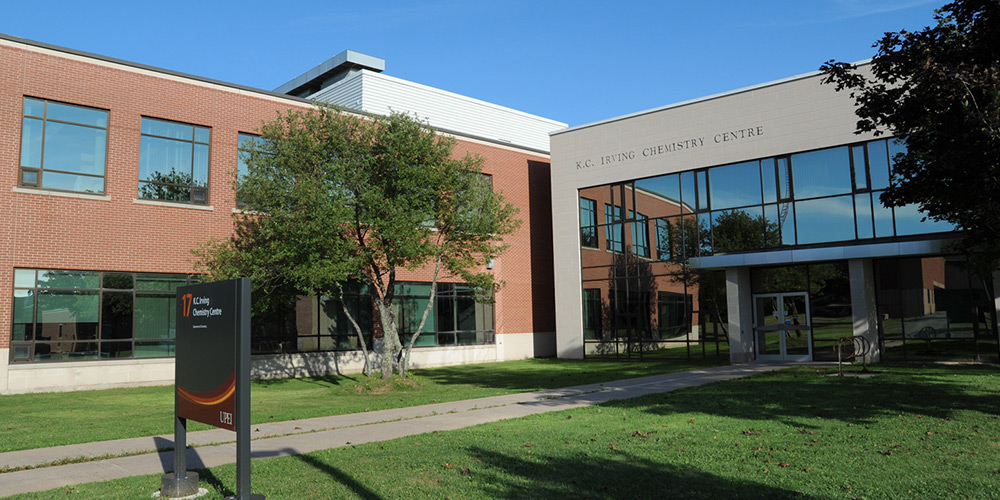
The department is located in the K. C. Irving Chemistry Centre, which is fully equipped with dedicated research labs, undergraduate teaching labs, student computer room, and "smart” classrooms. We have a very active Chemistry Student Society, which organizes Chemistry Open Houses, fundraising barbecues, golf days, and other social events.
Need more information about Chemistry?
The personal information requested on this form is collected under Section 31(c) of the PEI Freedom of Information and Protection of Privacy Act. Read our Disclaimer.
Note: Current UPEI students should refer to Student Planning in myUPEI and the UPEI Academic Calendar governing their entry year, and speak to an academic advisor about course requirements. The course structure presented for this program is a recommended, unofficial progression for prospective students.
Note: As per Academic Regulation 1h, all undergraduate degree programs require successful completion of IKE-1040 and a Writing Intensive Course.
The Honours Program in Chemistry is designed to provide research experience at the undergraduate level within the BSc program. It is available to students with a strong academic background who intend to continue studies at the post-graduate level in Chemistry or some related field, or to students who intend to pursue a career where research experience would be an asset.
The Honours Program differs from the major in requiring a two-semester research course with thesis report, in the requirement of 126 semester hours for the degree and in the requirement of an additional five advanced Chemistry courses. Students in the Honours Program in Chemistry must take at least 69 semester hours of chemistry in total and must at the same time complete certain courses as specified by the major requirements.
The required Chemistry courses are: Chemistry 1110-1120, Chemistry 2210, Chemistry 2410-2420, Chemistry 2310, Chemistry 2720, Chemistry 3220, Chemistry 3310, Chemistry 3420, Chemistry 3530, Chemistry 3610, Chemistry 3740, Chemistry 4320, Chemistry 4410 and Chemistry 4670 or 4680. Three additional elective courses in Chemistry are also required. Chemistry 4900, a two-term research course is the capstone of the program.
Additional course requirements for the Chemistry Honours include the following courses from other disciplines: Biology 1310-1320; Physics 1110-1120 (highly recommended) or Physics 1210-1220; and four courses in mathematics: Mathematics 1910 Single Variable Calculus I or Mathematics 1120 Calculus Social, Life Sciences and three additional MATH or STAT courses. (From approved list)
An outline of the requirements for the Honours Program in Chemistry in the suggested sequence for their completion is given below, but deviations from it are permitted provided that the pertinent prerequisites are fulfilled. Students must be aware that the Honours Program in Chemistry has specific admission requirements described below.
First Year
- Chemistry 1110-1120 General Chemistry I and II
- Biology 1310-1320 General Biology I and II
- Physics 1110-1120 (highly recommended) or 1210-1220 General Physics
- Mathematics 1910 Single Variable Calculus I or Mathematics 1120 Calculus Social, Life Sciences and one additional MATH or STAT course
- IKE 1040 Indigenous Teachings of Turtle Island
- Electives (3 semester hours)
Total: 30 or 32 semester hours, depending on Math choices. Mathematics 1910 and 1920 are recommended.
Second Year
- Chemistry 2210 Analytical Chemistry
- Chemistry 2410-2420 Organic Chemistry I & II
- Chemistry 2310 Physical Chemistry I
- Chemistry 2720 Inorganic Chemistry I
- Mathematics 2910 Multivariable and Vector Calculus MATH or STAT course (3 or 4 semester hours) (From approved list)
- Electives (9 or 12 semester hours)*
Total: 28 or 30 semester hours, depending on Math choices. Mathematics 2910 Multivariable and Vector Calculus is recommended.
Third Year
- Chemistry 3220 Analytical Instrumentation
- Chemistry 3310 Physical Chemistry II
- Chemistry 3420 Advanced Organic Chemistry
- Chemistry 3530 Biochemistry
- Chemistry 3610 Organic Spectroscopy
- Chemistry 3740 Inorganic Chemistry II
- Chemistry elective (3 semester hours)
- MATH or STAT course (3 semester hours) (From approved list)
- Electives (6 semester hours)
Total: 30 semester hours.
Fourth Year
- Chemistry 4320 Methods in Computational Chemistry
- Chemistry 4410 Physical Organic Chemistry
- Chemistry 4670 Inorganic Reaction Mechanisms and Catalysis OR Chemistry 4680 Advanced Inorganic Chemistry
- Chemistry 4900 Honours Thesis
- Chemistry electives (6 semester hours)
- Electives (9 semester hours)
Total: 36 semester hours.
The Chemistry electives may be chosen from among Chemistry courses numbered: 2020, 2820, or any 4th year Chemistry course. The Mathematics electives may be chosen from Mathematics 1920, 2610,2910 3010, Statistics 1210 or Statistics 21910, and Statistics 2910 in consultation with the Chair. As well, students in the Honours Program in Chemistry are strongly advised to take Physics 2120 (Electricity, Magnets, Circuits) and/or Physics 3120 (Electromagnetism I)
Honours students should note that Chemistry 4900 is a two-semester course and carries twelve semester hours of credit. No credit for the first semester will be granted without successful completion of the second semester of the course.
For admission to the Honours Program, students must have a minimum average of 70% in all previous courses; normally the Department expects high second-class standing or first-class standing in previous Chemistry courses. Permission of the Department is also required and is contingent on the student finding an Honours Advisor, on being assigned an advisory committee, on acceptance of the research project by the Chemistry Department, and on general acceptability. Students interested in doing Honours should consult with the Department Chair as early as possible and not later than March 31 of the student’s third year.
To graduate with a BSc Honours in Chemistry, students must complete 126 semester hours of credit which meet the required courses outlined above. As well, students must attain a 75% average in all Chemistry courses combined and must achieve a minimum overall average of 70% in all courses submitted for the degree. Students failing to meet the Honours requirements may apply for a transfer to the BSc Chemistry Major Program or to other degree programs.
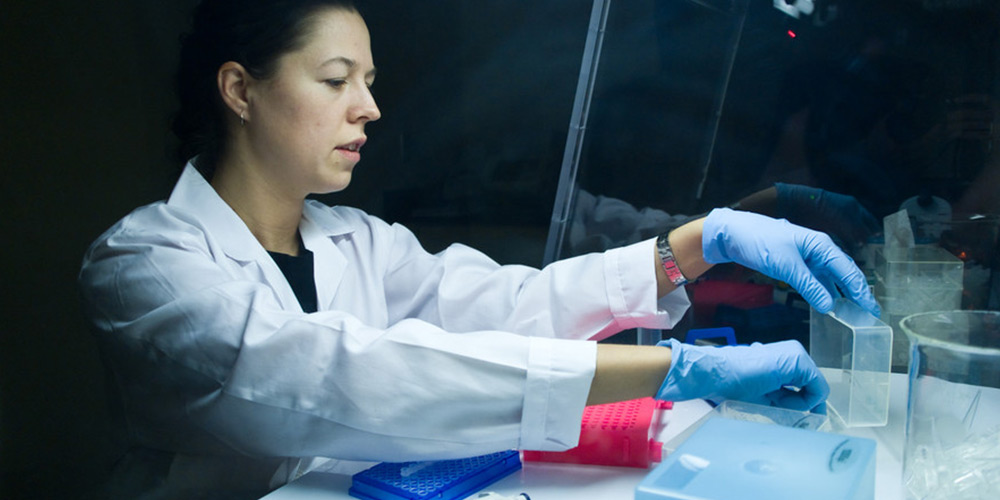
Students pursuing a Bachelor of Science degree with a major in Chemistry must take at least 48 semester hours of chemistry in total and must at the same time complete certain courses as specified by the major requirements.
The required Chemistry courses are: Chemistry 1110-1120, Chemistry 2210, Chemistry 2410-2420, Chemistry 2310, Chemistry 2720, Chemistry 3220, Chemistry 3310, Chemistry 3420, Chemistry 3530, Chemistry 3610, Chemistry 3740, Chemistry 4820 OR 4830 and two Chemistry electives, at least one of which is at the 4th year level.
Additional course requirements for the Chemistry major include the following courses from other disciplines: Biology 1310-1320, Physics 1110-1120 (highly recommended) or Physics 1210-1220., Mathematics 1910 or Mathematics 1120, and one additional MATH or STAT course.
Students majoring in Chemistry are advised to take Mathematics 1910/1920/2910 for the mathematic requirement and Physics 2120.
All programs of study of students declared as Chemistry majors must be approved by the Chair of the Department. An outline of the Chemistry major requirements in the suggested sequence for their completion is given below, but deviations from it are permitted provided that the pertinent prerequisites are fulfilled.
First Year
- Chemistry 1110-1120 - General Chemistry I and II
- Biology 1310-1320 - General Biology I and II
- Physics 1110-1120 or 1210-1220 General Physics
- Mathematics 1910 - Single Variable Calculus I or Mathematics 1120 Calculus Social, Life Sciences, and one additional MATH or STAT course
- IKE 1040 Indigenous Teachings of Turtle Island
- Electives (3 semester hours)
Second Year
- Chemistry 2210 - Analytical Chemistry
- Chemistry 2410-2420 - Organic Chemistry I & II
- Chemistry 2310 - Physical Chemistry I
- Chemistry 2720 - Inorganic Chemistry I
- Electives (15 semester hours)
Third Year
- Chemistry 3220 - Analytical Instrumentation
- Chemistry 3310 - Physical Chemistry II
- Chemistry 3420 - Advanced Organic Chemistry
- Chemistry 3610 - Organic Spectroscopy
- Chemistry 3740 - Inorganic Chemistry II
- Electives (15 semester hours)
Fourth Year
- Chemistry 3530 - Biochemistry
- Chemistry 4820 - Advanced Research Project OR Chemistry 4830 - Advanced Chemistry Laboratory*
- Two Chemistry Electives (6 semester hours)
- Electives (15 or 18 semester hours*)
The total number of electives depends on whether Chemistry 4820 (6 credits) or Chemistry 4830 (3 credits) is taken to fulfill the fourth year laboratory requirement. The Chemistry electives may be chosen from the Chemistry courses numbered: 2020, 2820, or any 4th year Chemistry course. At least one of the electives must be a 4th year course Students choosing Chemistry 4830 must also choose Chemistry 2020 as one of the chemistry electives.
Students may obtain a degree with a minor in Chemistry by successfully completing the following courses:
- Chemistry 1110-1120
- Chemistry 2210
- Chemistry 2310
- Chemistry 2720
AND
- Chemistry 2020 and 2430
OR
- Chemistry 2410 and 2420
With permission of the chair, one of the above courses may be replaced with one of the Chemistry 3220, 3310, 3420, 3610 or 3740.
The UPEI Co-op Program is an integrated approach to university education which enables students to alternate academic terms on campus with work terms in suitable employment. The success of such programs is founded on the principle that students are able to apply theoretical knowledge from course studies in the workplace and return to the classroom with practical workplace experience. Students who successfully complete all the requirements of the program will have the notation entered on their transcripts and on the graduation parchment.
Students accepted into the program, complete at least three paid work terms of normally 14 weeks duration, and three professional development courses. Credits earned through completion of work terms are counted as general electives.
The Co-op option is available to full-time students in the Chemistry Major or Honours program Applications to the Co-op Education Program are normally made after completion of the first year of study. Credits earned through completion of work terms are counted as general electives.
Visit the Co-operative Education Program website for more information.
High School Graduates
Canadian High School Equivalency Chart
- Grade 12 Academic English
- Grade 12 Academic Mathematics
- Two Grade 12 Academic Science subjects (acceptable subjects: Chemistry, Biology, Physics, Computer Science, Oceanography, Animal Science, Environmental Science)
- One additional Grade 12 Academic course
Please note: Successful completion of Grade 12 Chemistry (or equivalent) is required as a prerequisite for permission to register in CHEM-1110.
Please refer to the UPEI Academic Calendar for complete admissions information.
UPEI's undergraduate tuition is very competitive, and we offer millions of dollars in scholarships and awards.
Tuition
$8,130 per year, based on 30 credit hours ($813 per 3 credit course).
International students pay $9,718 per year in addition to full-time student tuition.
For a complete breakdown of part-time or full-time study as a student in the Faculty of Science, visit our Tuition and Fees page.
Scholarships and Awards
UPEI supports you and your educational goals. We administer millions of dollars in scholarships and awards to our undergraduate and graduate students every year. Depending on your faculty or program, and year of study, you may be eligible for available awards.
Search the complete list of scholarships for information and application forms.
Celebrating Student Achievement
Including Guaranteed Entrance Scholarships and Academic Excellence Awards, these awards recognize the academic achievements of all students who meet the eligibility criteria while studying towards their first undergraduate degree.
Visit the Scholarships site for complete information.
UPEI's interesting and unique programs are enhanced by our caring and supporting faculty, instructors, and staff.


